In the GEMINI-1 & GEMINI-2 studies (ClinicalTrials.gov: NCT02831673 & NCT02831764), dolutegravir + lamivudine (DTG+3TC) was non-inferior to the 3-drug regimen of DTG + tenofovir/emtricitabine (TDF/FTC) in achieving plasma HIV-1 RNA <50 c/mL in treatment-naive adults at Weeks 48, 96 and 144.
GEMINI-1&2 are identical, global, double-blind, multicenter Phase III studies. Participants with screening HIV-1 RNA ?500,000 c/mL and no major viral resistance mutations to NRTIs, NNRTIs or PIs were randomised to once-daily DTG+3TC or DTG+TDF/FTC, stratified by plasma HIV-1 RNA and CD4+ cell count. The primary endpoint was the proportion of participants with plasma HIV-1 RNA <50 c/mL at Week 48 (Snapshot algorithm). We present a secondary endpoint analysis of efficacy at Week 144 by baseline disease and demographic characteristics. For the overall population, estimates and confidence intervals were based on a stratified analysis using Cochran-Mantel-Haenszel weights.
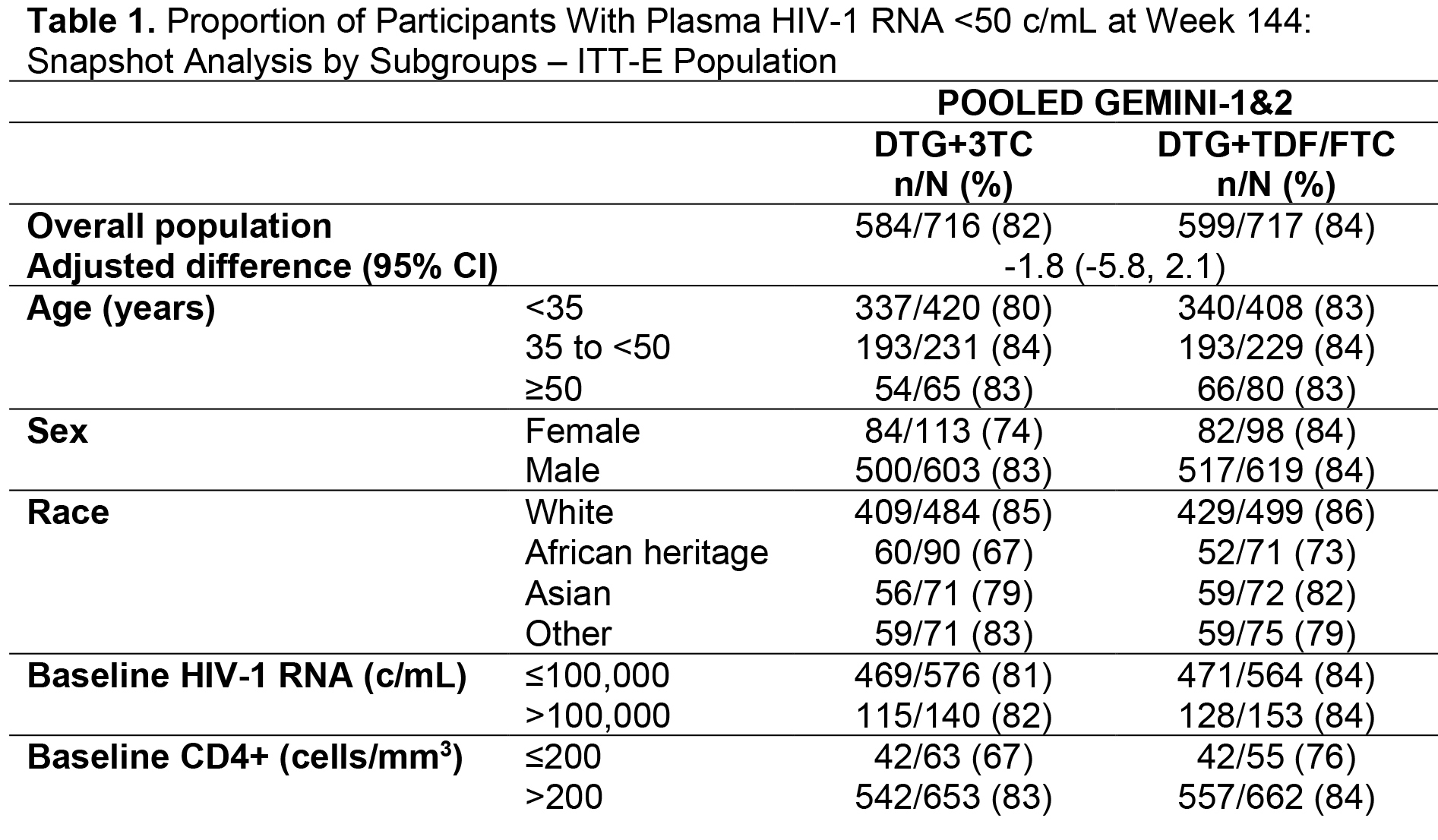
714 and 719 adults were randomised and treated in GEMINI-1&2, respectively. Using a 10% non-inferiority margin, DTG+3TC was non-inferior to DTG+TDF/FTC at Week 144 in both GEMINI-1&2 and in the pooled analysis. Response rates across baseline HIV-1 RNA subgroups were high and similar in both arms in the pooled analysis, including in participants with baseline HIV-1 RNA >100,000 c/mL (Table 1). Results were also generally consistent regardless of age, sex or race. While response rates remained lower in DTG+3TC compared to DTG+TDF/FTC participants with CD4+ ?200 cells/mm3, differences were smaller than at Weeks 48 and 96; most reasons for non-response were unrelated to virologic efficacy or treatment regimen. Across both studies, 12 participants on DTG+3TC and 9 on DTG+TDF/FTC met confirmed virologic withdrawal (CVW) criteria through Week 144; none had treatment-emergent INSTI or NRTI resistance mutations. One non-CVW DTG+3TC participant with reported non-adherence developed M184V at Week 132 and added R263R/K at Week 144, conferring a 1.8-fold change in DTG susceptibility.
In GEMINI-1&2, DTG+3TC was non-inferior to DTG+TDF/FTC in treatment-naive adults at Week 144, demonstrating durable efficacy. The subgroup efficacy results at Week 144 were generally consistent with overall study results and further demonstrate that DTG+3TC is an effective initial treatment for HIV-infected patients across a spectrum of disease characteristics and patient populations.