Gut dysbiosis, defined as pathogenic alterations in the distribution and abundance of different microbial species, is associated with neuropathic pain in a variety of clinical conditions such as nerve trauma, but this has not been explored in the context of neuropathy in people with (PWH).
We assessed gut microbial diversity in PWH and people without HIV (PWoH), some of whom reported distal neuropathic pain (DNP). DNP was graded on a standardized, validated severity scale. The gut microbiome was characterized using 16S rRNA sequencing and diversity was assessed by phylogenetic tree construction. Songbird analysis was used to produce a multinomial regression model predicting counts of specific microbial taxa through metadata covariate columns.
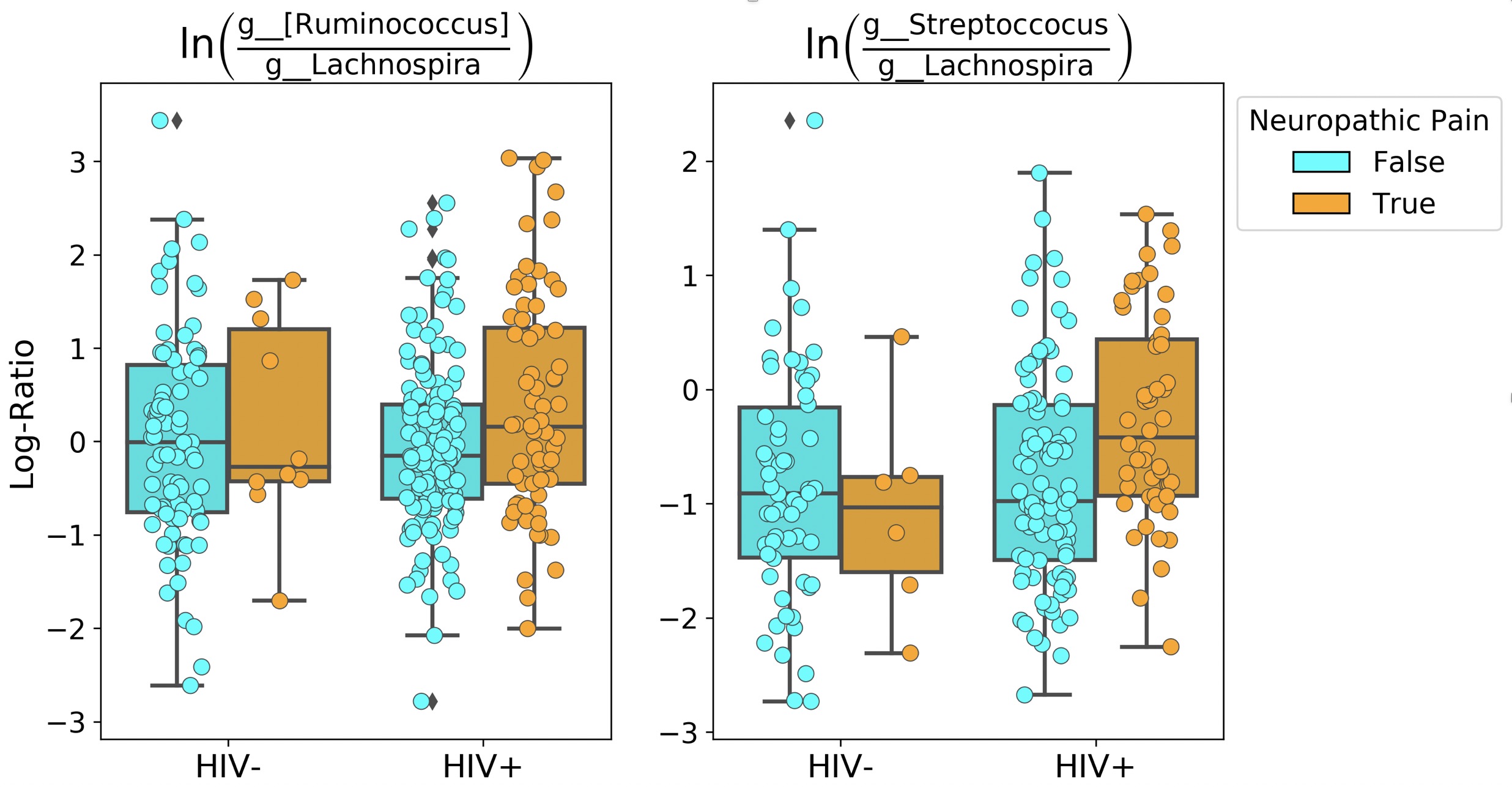
Participants were 267 PWH and 106 PWoH, 20.1% females, 45.3% nonwhite. Among PWH, median (interquartile range, IQR) nadir and current CD4 were 174 (21, 302) and 618 (448, 822) respectively; 90% were virally suppressed on antiretroviral therapy. PWH and PWoH did not differ with respect to microbiome diversity as indexed by Faith’s phylogenetic diversity (PD). More severe neuropathic pain was associated with lower alpha diversity as indexed by Faith’s PD (r = -0.158; p = 0.0043) in PWH, but not in PWoH. These relationships were not confounded by demographics or disease factors. In addition, the log-ratio of features identified at the genus level as [Ruminoccocus] to Lachnospira was statistically significantly higher in PWH with DNP than in PWH without DNP (t-test, p = 0.007). The Ruminococcus association is reported with note of the potential error in identification, as indicated by brackets. Furthermore, the log-ratio of Streptococcus features to Lachnospira features also was higher in PWH with DNP than in those without (t-test, p = 0.001).
Our results, in combination with previous findings in other neuropathic pain conditions, suggest that gut dysbiosis, particularly reductions in diversity and relative increases in the ratios of Ruminococcus and Streptococcus to Lachnospira, may contribute to prevalent neuropathic pain in PWH. Two candidate pathways for these associations, involving microbial pro-inflammatory components and microbially-produced anti-inflammatory short chain fatty acids, are discussed. Future studies might test interventions to re-establish a healthy gut microbiota and determine if this prevents or improves neuropathic pain.