Dimethyl fumarate (DMF), an FDA-approved, anti-inflammatory, antioxidant neuroprotective drug acts in part through antioxidative gene induction. For testing as an HIV neuroprotectant, we had shown that DMF, with or without cART, increases antioxidant enzyme expression and reduces excitotoxin release from HIV-infected macrophages (HIV/SIV brain reservoir). We hypothesized that DMF treatment of SIV-infected macaques would induce brain antioxidant responses and reduce oxidative stress and neuroinflammation.
Ten SIV-infected CD8+ T cell-depleted rhesus macaques were studied. Six received DMF [feeding, physiological dosing ~7 mg/kg/d)] starting 7d prior to SIVmac251 infection and through necropsy (40-118d). DMF metabolism in vivo was confirmed prior to infection (3 animals). We quantified SIV load, neurofilament light chain (NFL) in plasma and cerebrospinal fluid (CSF). In brain (11 regions), thymus, liver, and spleen we quantified: synaptic (PSD-95, synaptophysin, synapsin-1), axonal (NFL), astrocytic (GFAP), endothelial (VCAM-1, ICAM-1), and antioxidant enzymes (NQO1, GPX1, PRDX1, HO-1, 2). Frontal cortex (Fc) and brainstem (Bs) were stained for oxidative stress (8-OHdG/DNA, 3NT/proteins) and inflammation (HLA-DR, CD68). Statistical analyses were done by unpaired and paired t-test, and multivariate linear regression.
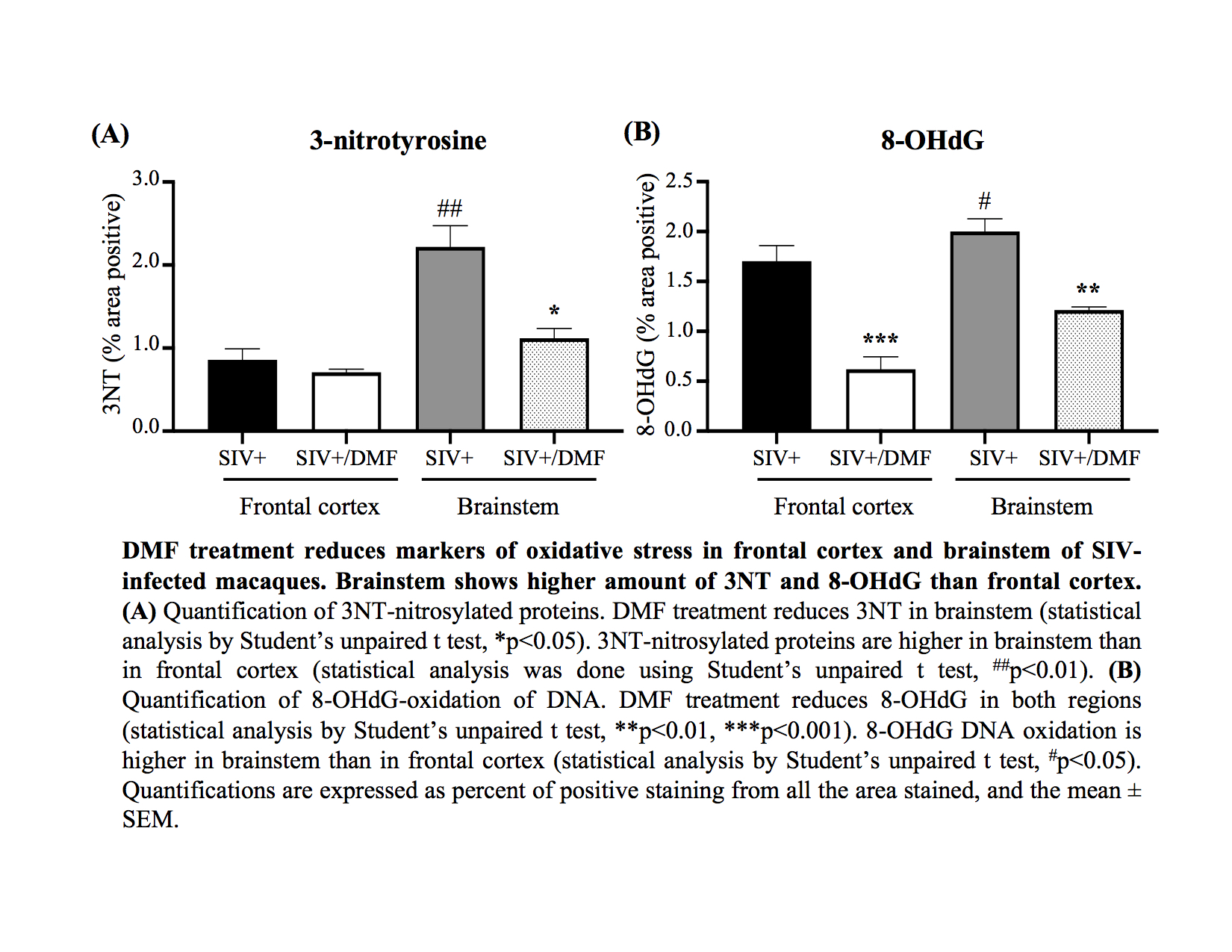
Chronic daily DMF treatment associated with higher mean expression of NQO1 (p<0.01), PRDX1 (p<0.05), GPX1 (p<0.001), VCAM-1 (p<0.01), and ICAM-1 (p<0.01) in brain; and higher PRDX1 (p<0.01) and HO-2 (p<0.01) in spleen. DMF treatment reduced 8-OHdG and 3NT expression in Bs (p<0.01, p<0.05, respectively) and 8-OHdG (p<0.001) and HLA-DR in Fc (p<0.05). There were no changes in NFL, PSD-95, GFAP or CD68 expression; and no changes in plasma or CSF NFL, SIV load, or hematologic parameters. One DMF-treated animal developed a diffuse lymphosarcoma and a jejunal B cell lymphoma (lymphocryptovirus), commonly associated with SIV infection.
Oral DMF treatment of SIV-infected rhesus macaques induces antioxidant enzyme expression while reducing DNA and protein oxidation and macrophage activation throughout vulnerable brain areas. A lack of adverse effects on SIV load, hematologic parameters, and CSF and plasma NFL levels suggests that DMF can safely induce potential neuroprotective brain responses despite severe immune deficiency. These results support the re-purposing of DMF for testing as a potential neuroprotective adjunct against HIV at all infection stages.