Although reports suggest that most individuals with COVID-19 infection develop detectable antibodies post infection, the kinetics, durability, and relative differences between IgM and IgG responses remain poorly understood beyond the first few weeks after symptom onset.
Within a large, well-phenotyped, diverse, prospective cohort of subjects with and without SARS-CoV-2 PCR-confirmed infection and historical controls derived from cohorts with high prevalence of viral coinfections and samples taken during prior flu seasons, we measured SARS-CoV-2 serological responses (both IgG and IgM) using three commercially available assays. We calculated sensitivity and specificity, relationship with disease severity and mapped the kinetics of antibody seropositivity and antibody levels over time using generalised additive models.
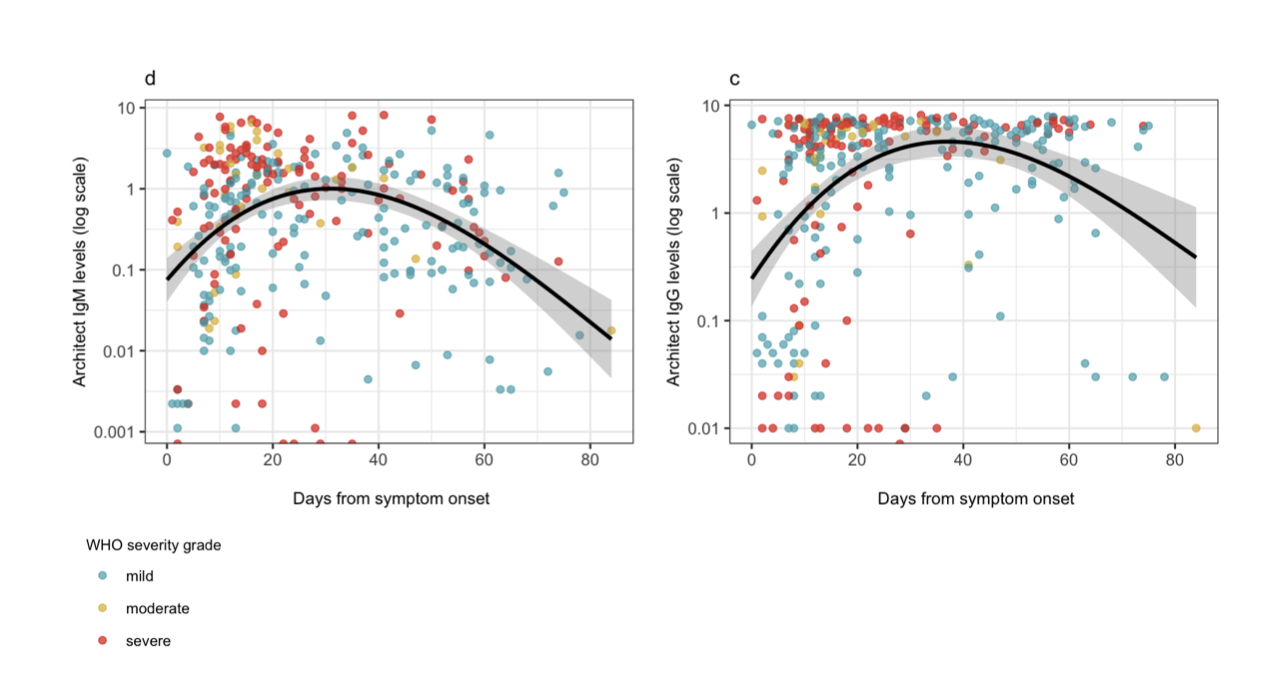
We analysed 1,001 samples (327 confirmed SARS-CoV-2, of whom 30% developed severe disease) from 752 subjects spanning a period of 90 days from symptom onset. Overall sensitivity was lower (44.1-47.1%) early (<10 days) after symptom onset but increased to >80% after 10 days. IgM positivity increased earlier than IgG-targeted assay but positivity peaked between day 32 and 38 post onset of symptoms and declined thereafter, a dynamic that was confirmed when antibody levels were analysed and was more rapid with IgM. Early (<10 days) IgM but not IgG levels were significantly higher in those who subsequently developed severe disease (signal / cut-off 4.20 (0.75-17.93) versus 1.07 (0.21-5.46), P=0.048).
This study suggests that post-infectious antibody responses in those with confirmed COVID-19 infection begin to decline relatively early post infection and suggests a potential role for higher IgM levels early in infection predicting subsequent disease severity.