Effective antiretroviral therapy (ART) has extended the lifespan of people with HIV (PWH), who increasingly experience non-AIDS comorbidities which affect their overall health and contribute to early mortality. Occurrence of these comorbidities has been linked to elevated levels of systemic inflammation. Numerous clinical biomarkers including CRP, IL-6, and sCD14 have been shown to be independently associated both with comorbidity prevalence and early mortality. The precise immune pathways involved in the pathogenesis of these inflammatory non-infectious complications, however, remain poorly understood hampering targeted interventions. We hypothesized that unbiased serum proteomics would identify novel pathways enriched in PWH and associated with non-AIDS comorbidities.
Single time point plasma samples from a subset of participants of the AGEhIV Cohort Study were subjected to aptamer-based proteomic screens (SOMAscan), yielding quantification of 1,317 serum proteins. A total of 78 participants were selected including 51 people with HIV (PWH) and 27 seronegative controls (HC) matched for sex/sexual behaviour, age, BMI, and smoking status. Comorbidities captured included non-AIDS defining cancers, myocardial infarction, angina pectoris, ischemic stroke/transient ischemic attack, peripheral arterial disease, heart failure, chronic obstructive pulmonary disease, type 2 diabetes, advanced liver fibrosis, osteoporotic fracture, and renal insufficiency.
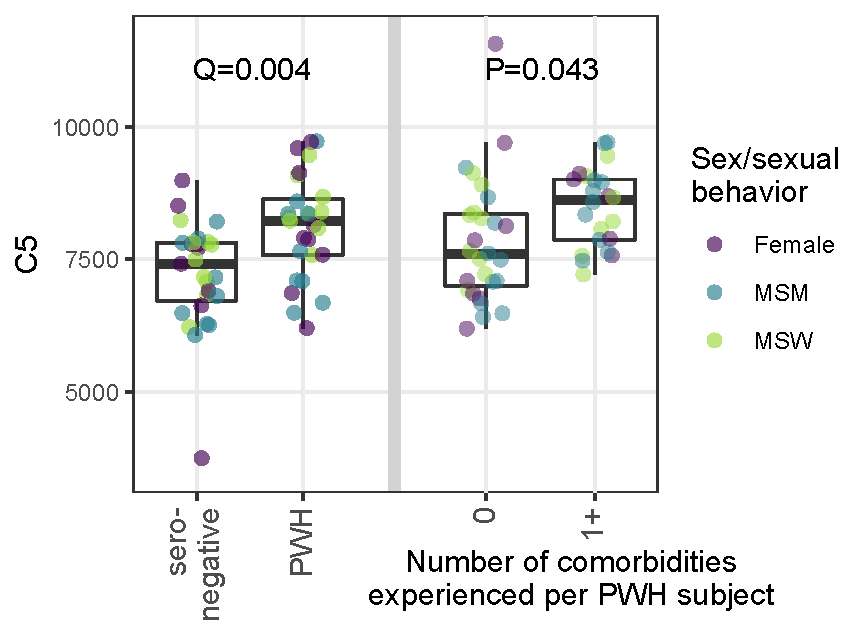
The median age for both PWH and HC was 55.3 years and 33% of participants were women. The median CD4 count in PWH was 815 cells/uL and all were virologically suppressed. We found that complement activation was the most enriched pathway in the serum proteome of PWH by two independent pathway classification databases (WikiPathways and Human Phenotype Ontology). Complement component C5 was among the top most enriched specific proteins in PWH and correlated significantly with having experienced a clinical non-AIDS event among PWH. C5 retained its significant association with comorbidity prevalence after adjustment for IL-6, D-dimer, suPAR, and sCD14 levels (P=0.043, OR per 1 IQR = 1.73), and did not correlate with these marker levels.
We propose that complement pathway components like C5 should be further evaluated as predictive biomarkers for HIV-associated non-infectious comorbidities. If validated, they may serve as more informative end points in clinical trials, and novel targets for new therapeutic approaches.