Patients with Sickle cell disease (SCD), an inherited hemoglobinopathy that affects approximately 100,000 people in the U.S, have lower risk for HIV-1 infection. We previously showed that ex vivo HIV-1 infection is restricted in SCD peripheral blood mononuclear cells (PBMCs), in part, due to the upregulation of antiviral, inflammatory and hemolytic factors including heme oxygenase-1 (HO-1) that has demonstrated direct antiviral effect against HIV-1. As individuals with sickle cell trait (SCT) may develop mild hemolysis, we investigated whether SCT PBMCs restrict HIV-1 infection ex vivo mediated by the intrinsic antiviral factors including HO-1, and whether people living with HIV (PLWH) with SCT exhibit higher levels of CD4.
Ex vivo HIV-1 infection was analyzed SCT PBMCs obtained using IRB approved protocols. We used a custom designed array of 42 known restriction factors to analyze their expression in SCT PBMCs. Women’s Interagency HIV Study (WIHS) samples were obtained from WIHS repositories an genotyped for SCT trait. The population level effect of SCT on HIV-1 prevalence was analyzed using mixed effect linear model (using random intercept) models.
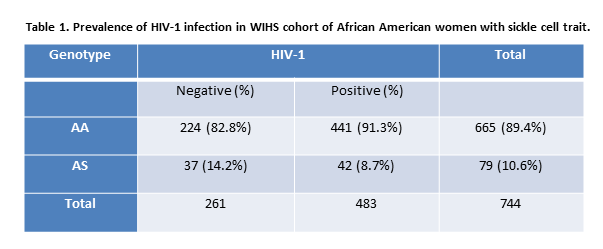
SCT PBMCs infected with HIV-1 ex vivo showed ~2-fold reduction of HIV-1 replication and lower levels of HIV-1 reverse transcription products, 2-LTR circles, integration and gag RNA expression. SCT PBMCs had higher HO-1 mRNA and protein levels and reduced RNR2 protein levels. HO-1 inhibition by tin porphyrin eliminated HIV-1 restriction in this ex vivo model. To determine the potential clinical significance of these findings, we studied Howard University clinic recruits and found higher levels of HO-1 and RNR2 mRNA and lower HIV-1 p24 levels among PLWH individuals with SCT. To determine the population level effect of SCT on HIV-1 prevalence, we assessed SCT trait among women living with HIV (WLH) in the Women Interagency HIV-1 Study (WIHS). Among African American participants in the WIHS, prevalence of SCT was lower among women with HIV compared with uninfected women 8.7% vs 14.2%, (OR 0.57, 95%CI = 0.36-0.92, p=0.020). WIHS WLC with SCT had higher levels of CD4+/CD8+ ratios over 20 years of follow up (p=0.003) than matched WLH without SCT (Table 1).
Our findings suggest that HIV-1 restriction factors including HO-1 and RNR2 might restrict HIV-1 infection among individuals with SCT and limit the pathogenicity of HIV.