Background:
The REPRIEVE trial demonstrated that pitavastatin reduced the risk of major adverse cardiovascular events (MACE) by 35% and LDL by 30% compared to placebo over median 5.1 years of follow up. The REPRIEVE mechanistic study further demonstrated pitavastatin was associated with a significant reduction in progression of noncalcified coronary plaque volume compared to placebo as well as changes in oxLDL and LpPLA2. This analysis further interrogates these findings to examine whether pitavastatin effects on lipids and these inflammatory biomarkers relate to changes in plaque.
Methods:
Coronary plaque volume was assessed at baseline and 24 months by CT angiography, using a threshold of <350 HU to define noncalcified plaque. Biomarker changes were analyzed on the log2 scale. Pearson correlation was used to assess associations between changes in LDL, biomarkers, and plaque (0 to 24 months). For this mechanistic assessment, analyses were restricted to participants who remained on randomized treatment for 24 months with biomarkers assessed.
Results:
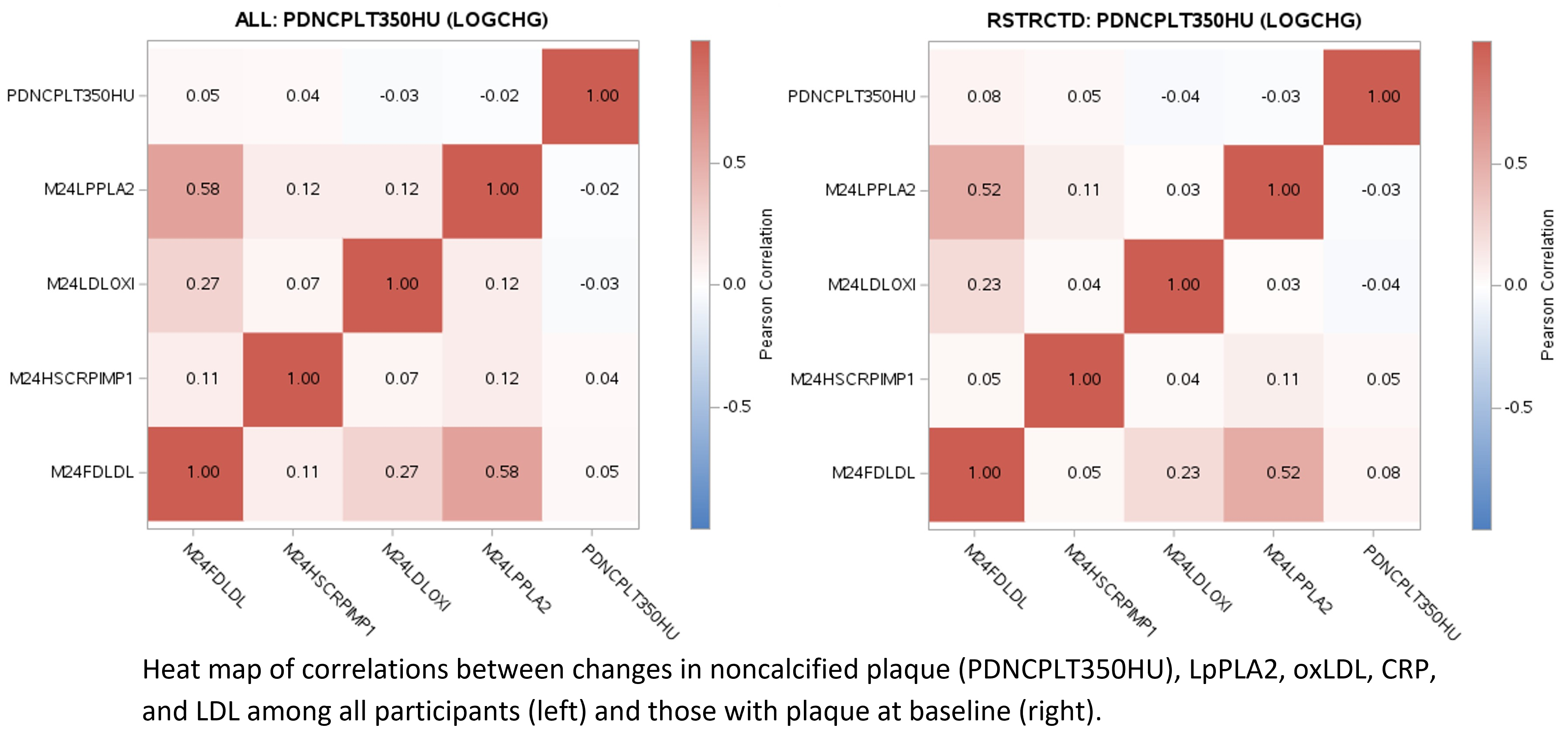
The 604 participants (304 pitavastatin, 300 placebo) included in the analysis were representative of the substudy population (mean age 51 years, sex 17% female, CVD risk median 4.6%). Over 24 months, pitavastatin was associated with a 19% [95% CI 8, 29] reduction in oxLDL and a 10% [-6, 14] reduction in LpPLA2 compared to neutral changes or increases in the placebo group. Corresponding mean fold changes in each group were 0.81 [0.71, 0.92] vs. 1.00 [0.89, 1.13] for oxLDL and 0.90 [0.87, 0.94] vs. 1.17 [1.13, 1.21] for LpPLA2, pitavastatin vs. placebo, respectively. No associations between changes in LDL, oxLDL, or LpPLA2, and either non-calcified or total plaque volume were apparent (|rho| < 0.15, Figure). Adjustment for changes in the biomarkers did not impact the effect of pitavastatin to reduce noncalcified plaque. Similar results were seen in the entire substudy population and the subset with plaque at baseline.
Conclusions:
Pitavastatin significantly reduced LDL and key biomarkers of lipid oxidation and arterial inflammation in REPRIEVE, but these changes were not associated with changes in noncalcified or total plaque volumes. Further studies will assess effects of these pathways on MACE and also the effects of pitavastatin on other mechanistic pathways which might link statin effects to improvements in coronary artery disease indices and MACE in PWH.