Background:
Declines in physical function occur with age, and are common among people with HIV (PWH). Due in part to the anti-inflammatory effect, statins may alleviate declines in physical function though most studies assessing the effect of statins on physical function in the general population have been observational and randomized controlled data have been limited to one year of follow-up. We hypothesized that physical function would decline among PWH, but with the known anti-inflammatory effects of statins, PWH randomized to pitavastatin would have slower declines compared to placebo.
Methods:
REPRIEVE is a double-blind randomized trial evaluating pitavastatin for primary prevention of major adverse cardiovascular events in PWH; the PREPARE substudy assessed physical function in a subset of participants annually for up to 5 years. Chair rise rate based on time to complete 10 chair rises (primary outcome), 4-meter gait speed, grip strength, and a combined modified short physical performance test were analyzed using linear mixed models.
Results:
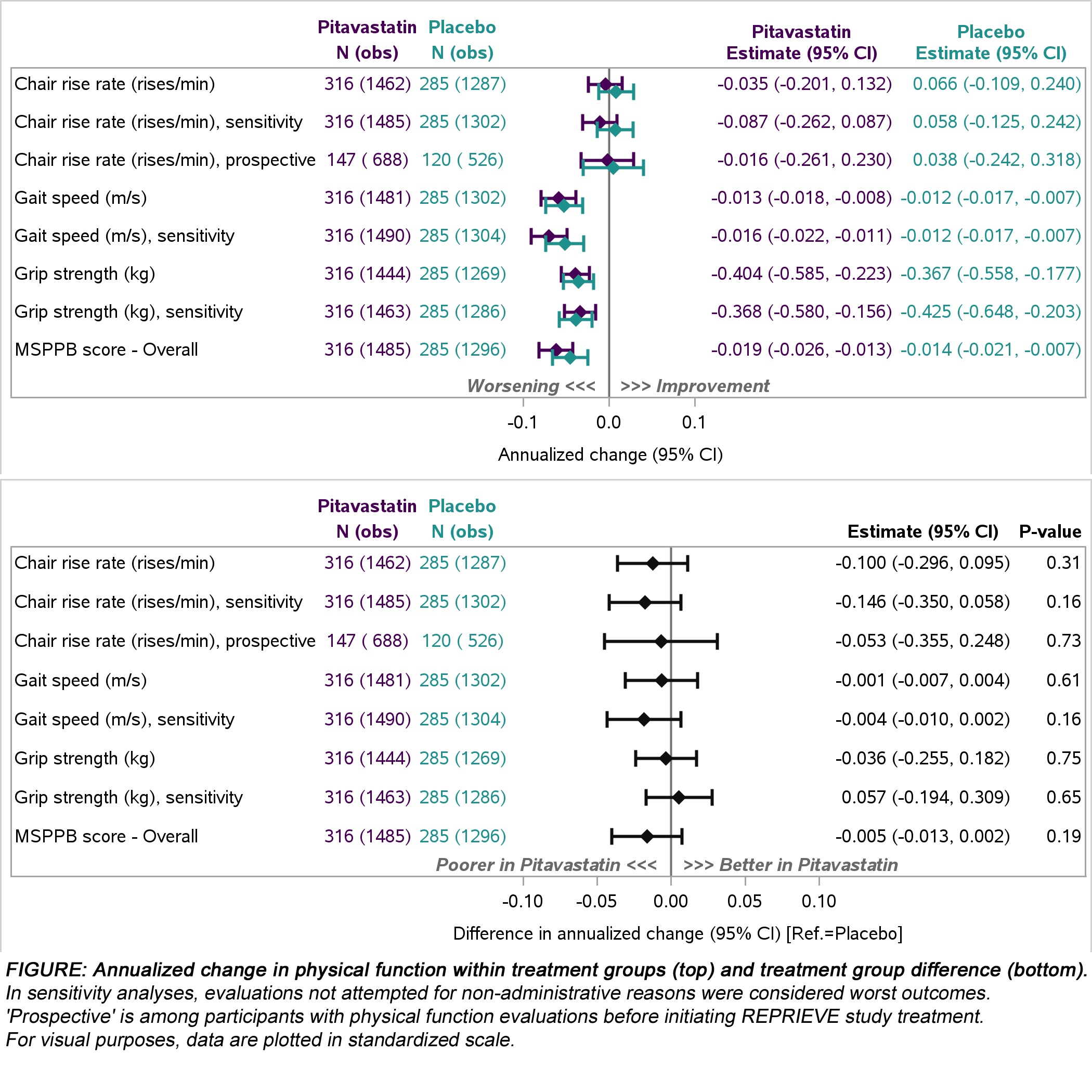
Of 602 PWH, 52% were randomized to pitavastatin and 48% to placebo. Median age was 51 years; 18% were natal female; 2% transgender; 40% Black, and 18% Hispanic; median BMI was 27.2 (Q1, Q3 24.3, 30.1) kg/m2. 45% of participants enrolled at REPRIEVE entry; 55% enrolled within 24 months after REPRIEVE treatment initiation. Median PREPARE follow-up was 4.7 (4.3, 5.0) years; 81% completed follow-up. Physical function was similar between the two treatment groups at PREPARE entry. There was no evidence of decline in chair rise rate in either treatment group (Figure), and no significant difference in the pitavastatin group compared to placebo (difference -0.10 [95% CI: -0.30, 0.10] rises/min/year; p=0.31). Small declines were observed in other physical function tests in both treatment groups, with no apparent differences between groups (Figure). The findings were consistent in subgroup analyses by age, sex, race, ART duration, CD4 cell count, baseline physical function, and presence of muscle symptoms (not shown).
Conclusions:
We observed minimal declines in physical function over 5 years of follow-up among middle-aged PWH, with no differences among PWH randomized to pitavastatin compared to placebo. Our findings do not support the use of statins to maintain physical function in this population, but do expand upon the overall REPRIEVE trial findings to support the long-term safety of statin therapy on physical function in PWH.