Background:
Cervical cancer is the second most reported cancer (13%) among women aged 15-49 years old in Ethiopia. Human papilloma virus (HPV) types 16 and 18 are associated with about 70% of cervical cancer worldwide and HPV 16 alone is associated with 60% of cervical cancer. Women living with HIV (WLHIV) have an increased risk of acquiring HPV infection, more rapid progression to cervical cancer, and higher rates of recurrence following treatment. As part of the cervical cancer screening service scale-up efforts for WLHIV, CDC Ethiopia introduced WHO’s ‘screen, triage and treat’ approach using HPV DNA testing followed by visual inspection of the cervix with acetic acid (VIA) in 2021.
Methods:
HPV testing was introduced at 70 public health facilities providing ART services in five PEPFAR-supported regions in collaboration with the Regional Health Bureaus, Ethiopian Public Health Institute (EPHI), and the Ministry of Health (MoH) of Ethiopia. HPV testing was done in fifteen laboratories using the already existing molecular platforms (nine Abbott and six Roche). WLHIV between the ages 15-49 were targeted for HPV testing. HPV DNA test results were analyzed and reported by genotypes. All HPV positive WLHIV were contacted and advised to have VIA testing. We summarized these programmatic reports from these regional labs during April 2021-April 2022.
Results:
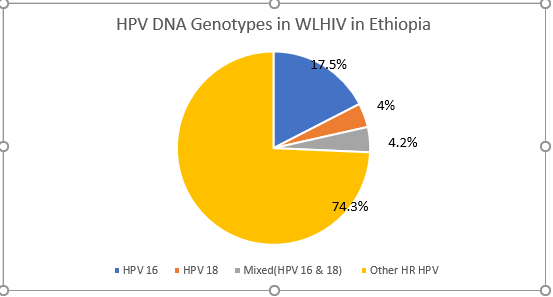
Out of the total 13,374 WLHIV tested, 3798 (28%) were HPV DNA positive for high risk (HR) types. Out of those with HPV positive result, we retrieved 3324 results with HPV DNA genotypes reported. The prevalence of HPV 16 only infections was 580 (17.5%) and that of HPV 18 only was 134 (4%) from total positives. In addition, the prevalence of mixed HPV 16 and 18 types was 140 (4.2%) and that of other HR non-HPV 16 or 18 infection among WLHIV that were tested positive was 2470 (74.3%) (Figure). Of those who had VIA (3032), 639 (21%) were VIA positive and 95% were treated.
Conclusions:
Over one-quarter of WLHIV in Ethiopia were infected with HR HPV and over 20% of those had a positive VIA increasing their risk of development of cervical cancer. Therefore, the implementation of strong cervical cancer screening program for early identification and treatment of high risk WLHIV is warranted.
HPV DNA Genotypes in WLHIV in Ethiopia