Background
HIV enters the central nervous system early after infection which can result in HIV-associated neurocognitive disorder (HAND), affecting as many as 50% of people living with HIV (PWH). HIV-induced neuroinflammation plays a critical role in HAND. Here, we investigated the impact of HIV infection on brain inflammation and metabolism using an advanced 3D human brain organoid model embedded with HIV-infected microglia.
Methods
We developed a complex human brain organoid model infused with HIV-infected microglia to capture the in vivo complexity of HIV infection in the human brain. We employed transcriptomics, coupled with genome-scale metabolic modeling to delineate metabolic and neuroinflammatory responses elicited by HIV-infected microglia in the brain.
Results
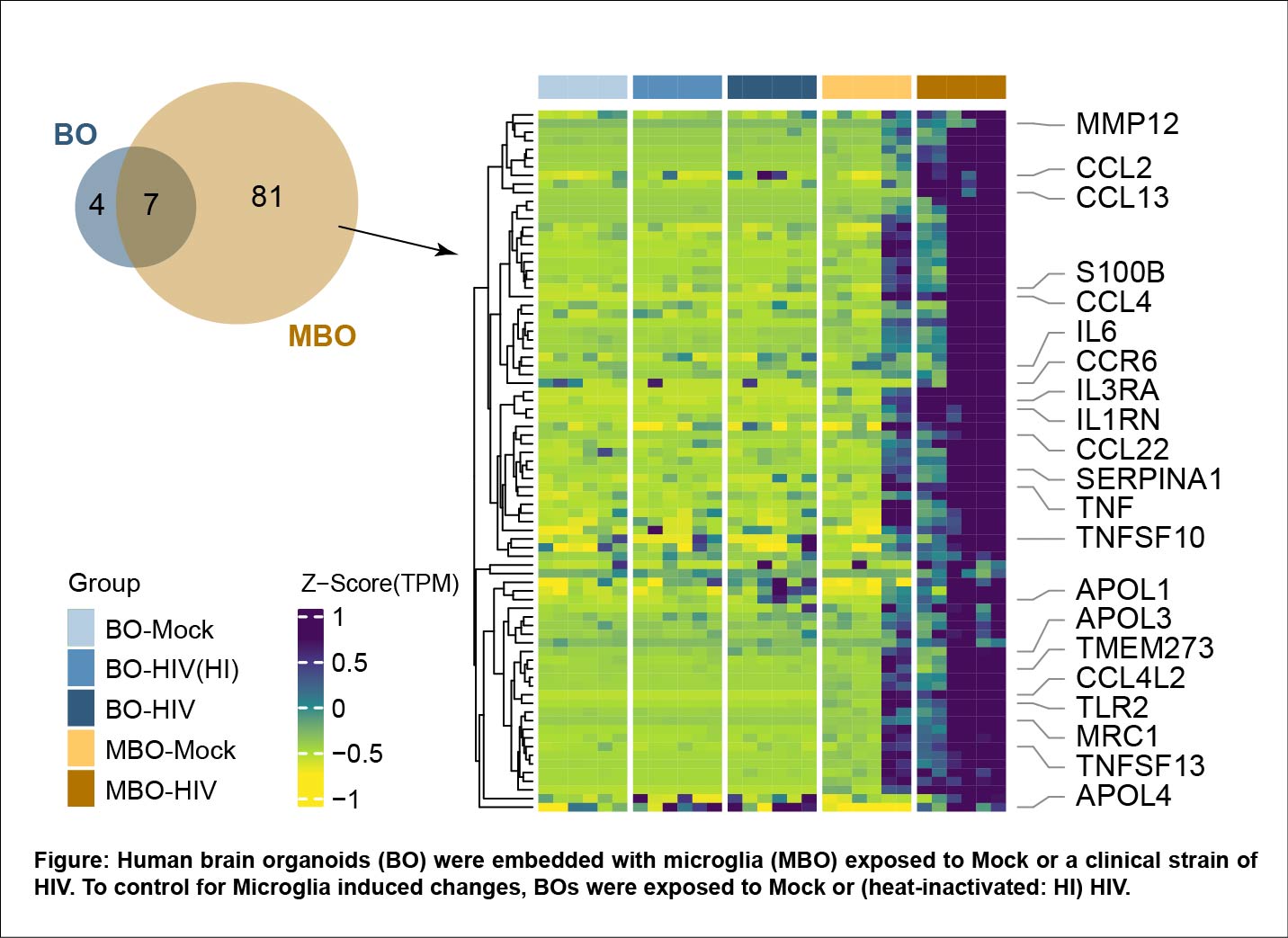
Microscopy confirmed successful integration of HIV-infected microglia in human brain organoids. Expression of HIV-p24 protein was observed co-localizing with microglia and astrocytes, indicating the transfer of HIV or HIV-proteins from infected microglia to astrocytes. Moreover, HIV-induced transcriptional changes in brain organoids were abundant as illustrated by the upregulation of several inflammatory pathways, as validated by RT-qPCR. Genome-scale metabolic modeling using transcriptomic data showed impaired polyamine and tryptophan metabolism, marked by elevated spermidine levels—a metabolite previously linked to neurological impairment in clinical studies.
Conclusions
We observed that HIV-induced inflammation in brain organoids is mediated by HIV-infected microglia and associated with changes in polyamine and tryptophan metabolism. These metabolic changes may contribute to the neuronal dysregulation observed in HAND.
Table or Figure