Background
Clinical decision support (CDS) systems are a promising strategy to improve HIV screening in pediatric settings. We assessed effectiveness of a CDS system to improve HIV screening at well-adolescent visits.
Methods
In this quasi-experimental pragmatic study, we developed and launched an electronic health record (EHR)-based CDS system across a 31-clinic, northeastern U.S, pediatric primary care network. The system included three components at annual well visits: 1) order sets with non-defaulted HIV test orders and universal HIV screening recommendations for patients 13+ years, 2) the Adolescent Health Questionnaire (AHQ), an electronic screener assessing sexual activity completed by patients on arrival, and 3) an automated EHR alert in the visit note for sexually active youth reminding clinicians to screen for HIV. Interrupted time series (ITS) analyses assessed differences in HIV screening rates pre- and post-CDS (12/2022-6/2023 vs 6/2023-12/2023) at well visits. Logistic regression included binary indicators for HIV test completion (primary outcome) and intervention period (pre vs post CDS), a fixed effect accounting for non-independence of intra-clinic observations, time in months, and a time x period interaction term. To a priori explore subgroup differences in effectiveness, separate ITS models included interaction terms for patient race (Black vs. non-Black), ethnicity, sex assigned at birth, gender identity, sexual orientation, and insurance.
Results
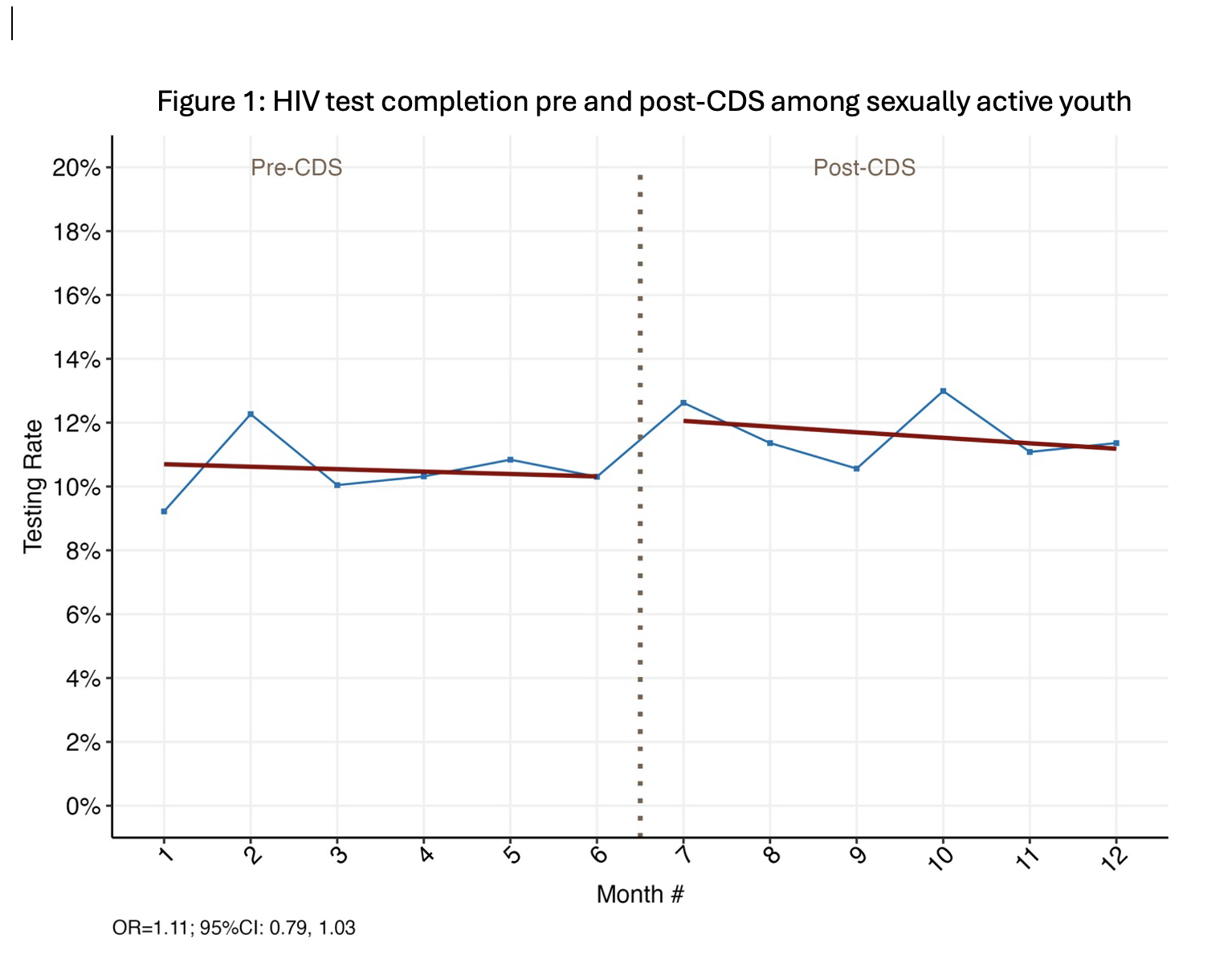
Of 60,592 adolescents aged 13-19 years-old (n=26,267 pre- and n=34,325 post-CDS), 24.7% were Black, 8.7% Latine, 49.5% female sex, 9.0% identified as LGBTQ, median age was 15 (IQR 14-16) and 15.1% reported sexual activity. Among all patients and sexually active patients, 2.2% and 11.1% received HIV screening, respectively. In ITS analyses, there were no differences in HIV screening rates between the pre- and post-CDS periods for all adolescents (OR 1.03, 95% CI: 0.87, 1.09). Similarly, there were no differences in HIV screening rates for sexually active youth (OR 1.11, 95% CI: 0.79, 1.03; Figure 1). In our subgroup analyses, there were no significant differences in HIV test completion within any patient subgroups.
Conclusions
In a large regional pediatric healthcare system, we found no significant effect of a CDS system on HIV screening. Our findings suggest that CDS primarily targeting knowledge and situational awareness may be insufficient to improve screening. Future CDS interventions should target additional systemic barriers.
Table or Figure