Background
Anti-retroviral therapy (ART) for people with HIV (PWH) is very effective in suppressing HIV replication and preventing disease progression. However, even while on ART, NK cells remain dysfunctional. Although the exact mechanism of this dysfunction is unknown, there is evidence of increased platelet-immune cell complex formation in PWH. These complexes alter immune cell functions, which could play a role in NK dysfunction. We propose another role of platelets during HIV infection through platelet-NK cell complexes (PNKCs). We predict that PNKCs are a key factor in promoting NK dysfunction during HIV infection.
Methods
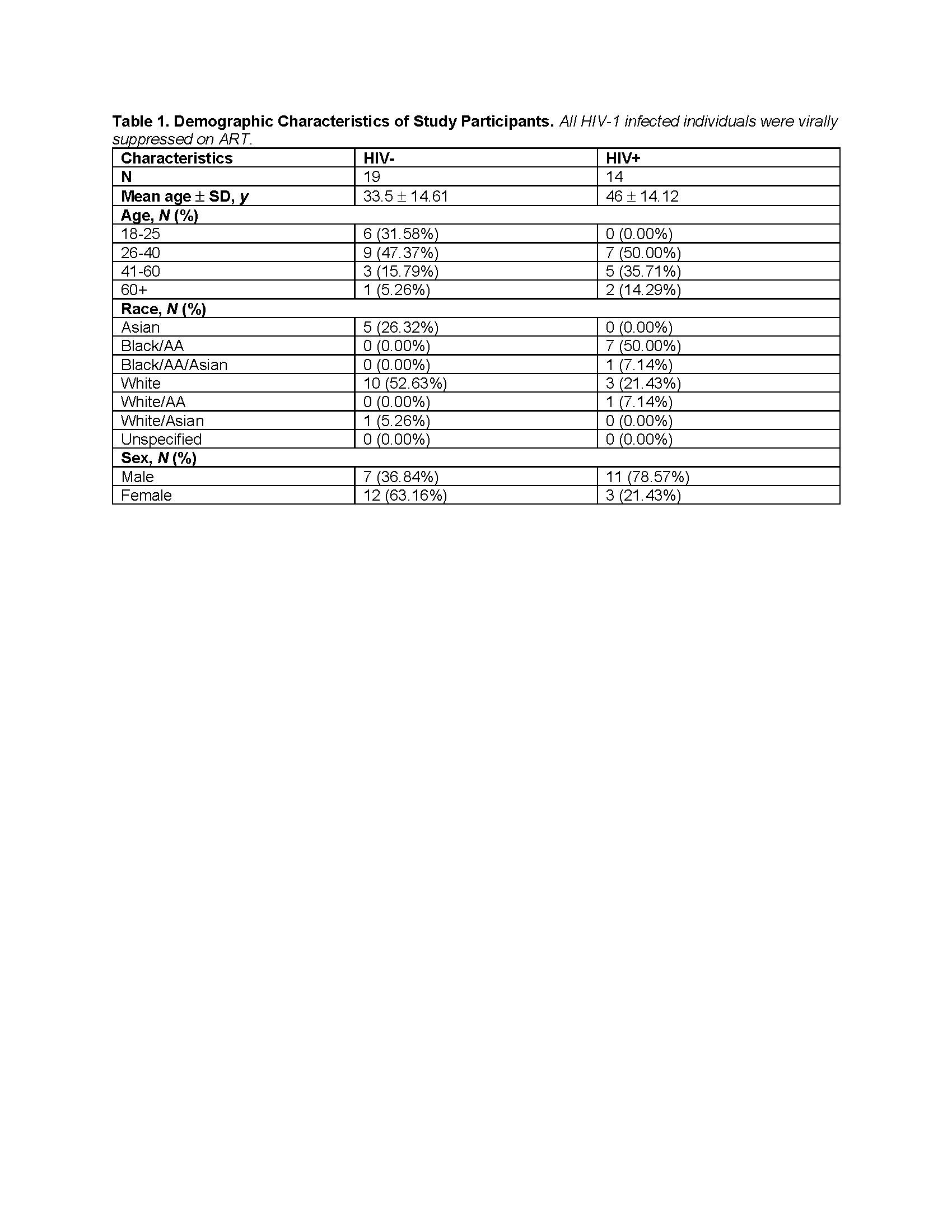
PBMCs isolated from people without HIV (PWOH) and PWH (Table 1) and in vitro platelet-NK co-cultures were stained by flow cytometry with markers for platelets and NK cells. PNKCs were also identified in vitro via correlative light and electron microscopy (CLEM). We followed NK cells co-cultured with platelets or platelet factors over 14 days, testing the NK killing capacity against target cells. Furthermore, Rhesus macaques (RMs) were treated with vehicle (n=5) or inclacumab, (n=5) at week -1 and week 2 post-infection and infected with SIV on day 0. PBMCs from days -28, 7, and 21, and at necropsy (days 32-39) were co-cultured with K562 in flow-based killing assays. Statistical significance was determined using Mann-Whitney t-tests with a p-value of <0.05.
Results
Our studies indicate that PWH have increased levels of PNKCs compared to PWOH, which persists regardless of the NK subset, biological sex, or age. In PWH, PNKCs have higher expression of CD314 and CD25 compared to non-PNKCs, as well as higher expression of CD69, and lower expression of CD335 compared to PNKCs from PWOH. In vitro, NK cells exposed to platelet and platelet factors have increased effector function markers by day 7, which reverses by day 14. NK cells exposed to platelets also have altered killing capacities that vary depending on the target cell. In vitro data was validated by in vivo studies in RMs, where inclacumab treatment alleviated NK dysfunction.
Conclusions
This study identifies elevated PNKCs in PWH, which have altered phenotypes compared to non-PNKCs and PNKCs from PWOH. In vitro, platelet-NK co-cultures confirm the formation of PNKCs, and both in vitro and in vivo studies implicate platelets as drivers in NK dysfunction. These results have important consequences on future immune cell therapeutics in which the inclusion of platelet inhibitors may enhance cure outcomes.
Table or Figure