Background
Long-acting cabotegravir and rilpivirine (LA-CAB/RPV) is a novel injectable antiretroviral therapy approved for virologically suppressed individuals with HIV-1. Data on the safety, efficacy, and outcomes for individuals receiving LA-CAB/RPV during pregnancy are limited. We evaluated HIV viral suppression, perinatal, and neonatal outcomes in pregnant persons with HIV-1 receiving LA-CAB/RPV. This is the first case series to evaluate these outcomes, offering new insight into the use of LA-CAB/RPV during pregnancy.
Methods
We performed a multi-center retrospective chart review of pregnant persons prescribed LA-CAB/RPV between January 2021 and October 2024. Patient demographics, HIV RNA throughout pregnancy, and key perinatal and neonatal outcomes, including birth weight, gestational age, and rates of viral suppression at delivery were collected.
Results
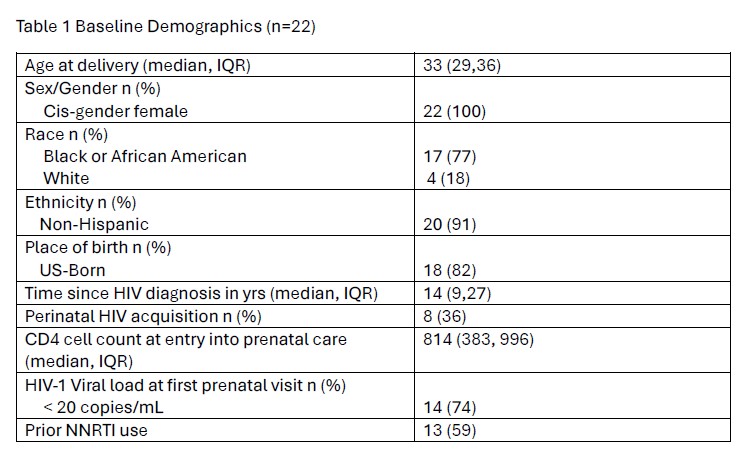
Twenty-two pregnant persons receiving LA-CAB/RPV were included. Baseline demographics are presented in Table 1. Sixteen (73%) initiated LA-CAB/RPV prior to pregnancy and 6 (27%) switched to LA-CAB/RPV during pregnancy. Among those who remained on LA-CAB/RPV for the remainder of pregnancy, 90% maintained HIV RNA <200 copies/mL. The majority had vaginal deliveries; caesarean deliveries were performed for obstetric indications only. Most neonates were born at term, with a median birth weight of 2,390 grams (interquartile range: 2,144, 2,816). Additionally, 81% (n=17) of the newborns received zidovudine only post-delivery. There were no cases of vertical transmission. Three cases of congenital anomalies occurred (ventriculomegaly, fetal pyelectasis, and Trisomy 21) which were not attributed to LA-CAB/RPV by an independent Maternal Fetal Medicine consultant.
Conclusions
The results of this multi-center retrospective cohort suggest that LA-CAB/RPV is associated with high percentage of viral suppression in pregnant persons with HIV-1. Given the small sample size, it was not possible to conduct a meaningful analysis of any associations between perinatal outcomes and the use of LA-CAB/RPV during pregnancy. Our findings support the consideration of LA-CAB/RPV as a viable treatment option during pregnancy, though further research with larger cohorts is needed to validate these findings and ensure long-term safety.
Table or Figure