Background
At the onset of the 2022 global mpox outbreak, infection from monkeypox virus was believed to offer long-term immunity. However, the first mpox reinfection in California was reported to the California Department Public of Health in April 2023. We sought to identify the frequency of mpox reinfections and associated characteristics to develop clinical and public health guidance to mitigate mpox morbidity.
Methods
We reviewed all mpox cases in California reported via public health surveillance from May 2022 to August 2024 and identified possible mpox reinfection among persons with two positive PCR results separated by >60 days. All possible reinfections underwent medical chart review to verify symptom resolution between test results and were classified as suspect, probable, or confirmed per the Centers for Disease Control and Prevention case definition. Specimens from both episodes of mpox infection were sought to conduct genetic sequencing to confirm reinfection. Epidemiological descriptive analyses were done using R software.
Results
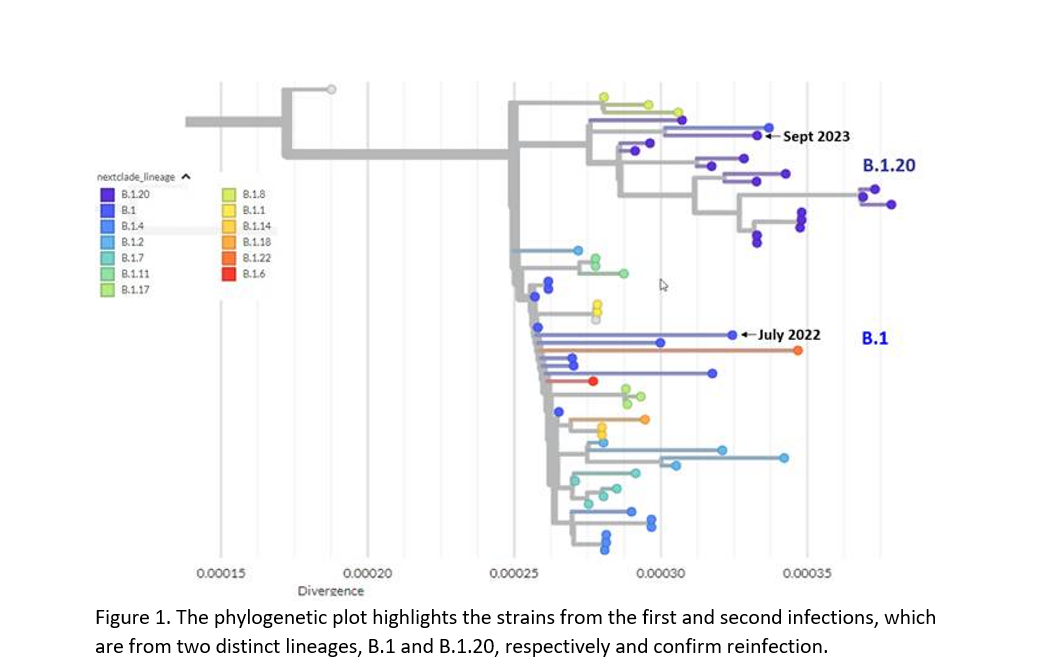
Out of 6476 reported mpox cases, 9 confirmed/probable mpox reinfections were identified (0.14%). Only one case had samples available from both infections and whole genome sequencing confirmed reinfection in this case (Figure 1). All 9 reinfection cases were cis-gender male and gay, bisexual, or other men who have sex with men. These people ranged in age from 26 to 59 years, 6 (66.7%) were Hispanic/Latinx, and 4 (44%) were living with HIV. The time interval from first to second infection was 266 to 608 days (median 425 days). One person had received a single dose of the JYNNEOS vaccine prior to their first infection. Two people had received a single dose and two people had received two doses of JYNNEOS prior to their second infection. The number of sexual partners 21 days prior to infection ranged from one to ten for first infection and one to 15 for second infection. Comparisons of severity data were inconclusive due to missing data and low sample size.
Conclusions
Previous mpox infection does not confer long-term immunity in all individuals. While rare, reinfection with mpox can occur. Our reinfection rates are likely an underestimate due to undertesting and lack of disease recognition. Clinicians should test for mpox in patients with compatible symptoms despite previous infection. More research is needed to understand the risk factors, need for vaccination post-infection, and clinical outcomes among people who are infected with mpox multiple times.
Table or Figure