Background
The clinical consequences of a low-level viremia (LLV) result (HIV-1 RNA 50-999 copies/mL) after a high viral load (VL) result (≥1,000 copies/mL) and intensive adherence counseling (IAC) are uncertain. The probability of future virological failure may be determined by the presence of drug resistance mutations (DRMs), but WHO does not recommend HIV drug resistance (HIVDR) testing for individuals with LLV. We determined the prevalence of major DRMs among Malawian adults and children on dolutegravir (DTG)-based antiretroviral therapy regimens (DBR) who had LLV following a high VL.
Methods
Between November 2022 and March 2023, we enrolled participants at 19 randomly selected high-volume ART clinics in all geographical regions of Malawi. Eligibility criteria were being on a DBR for ≥9 months; return visit after a previous unsuppressed VL; and completing ≥1 IAC session per guidelines. From second plasma samples obtained for VL retesting, specimens with LLV (150-999cps/mL) and high VL (≥1000cps/mL) were genotyped for the protease reverse transcriptase (PRRT) and integrase (IN) regions, using the ThermoFisher® HIV-1 Genotyping kit with Integrase. Results were interpreted using Stanford University HIVDR Database Algorithm (9.5). We present prevalence of major DRMs by drug class and to DTG.
Results
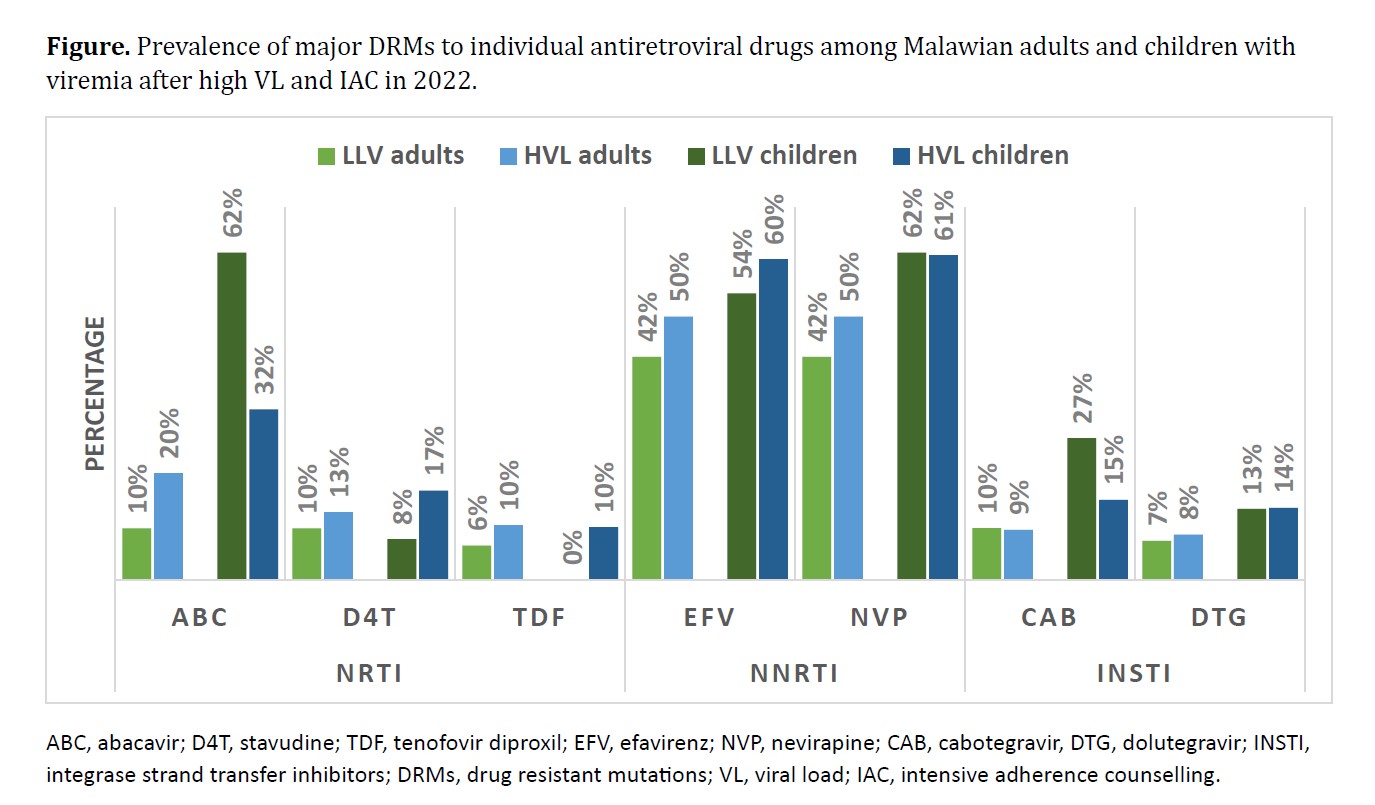
Of 74 samples with LLV, 54 were from adults, 20 from children aged 2-14 years. We successfully amplified PRRT and IN in 59.5% and 75.6% of the LLV samples following a high VL, respectively. Amplification success increased with higher VL, with rates for PRRT and IN reaching 79.2% and 87.5%, respectively from ≥300cp/mL. Prevalence of major DRMs to any nucleotide reverse transcriptase inhibitors (NRTI) was 28% (95%CI:14%-42%) and to any non-NRTIs (NNRTI) was 49% (95%CI:33%-64%). Prevalence of major DRMs to DTG was 9% (95%CI:1%-17%). No DRMs to protease inhibitors were observed. The prevalence of major DRMs to any NRTIs, NNRTIs and to DTG in LLV samples was like samples with two consecutive VL ≥1,000 copies/mL (figure).
Conclusions
mplification of PRRT and IN regions was successful in the majority of LLV samples when VL was ≥300cps/mL. Prevalence of major DRMs to DTG among Malawian adults and children with LLV, after a high VL and IAC adherence counselling, was 7% and 13% respectively, comparable to rates observed among adults and children with confirmed virological failure in the same survey. Prospective studies may help explain the clinical relevance of DTG resistance in LLV samples in this setting.
Table or Figure