Background
The impact of perinatal HIV exposure on children’s immune response to the hepatitis B virus (HBV) vaccine over time has yet to be fully understood. We determined the HBV prevalence in mother-child pairs and HBV vaccine response in children HIV-exposed uninfected (cHEU) and those unexposed uninfected (cHUU) over time in Botswana.
Methods
Mother-child specimens from pregnant women with and without HIV enrolled in the Botswana-based Tshilo Dikotla study (2016–2022) and followed up for three years were utilised. Baseline maternal samples were tested for HBV surface antigen (HBsAg) and HBV core antibodies (anti-HBc) using an enzyme linked immunosorbent assay. Plasma samples from children were screened for HBsAg, anti-HBc and HBV surface antibodies (anti-HBs) using a chemiluminescent assay at 2 and 3 years of age. Anti-HBs levels ≥10 mIU/mL were considered protective. Wilcoxon Rank-sum test and Chi-square tests were used to compare characteristics and vaccine responses by child HIV status. Paired t-tests were used to compare anti-HBs titers at two timepoints (year 2 and 3).
Results
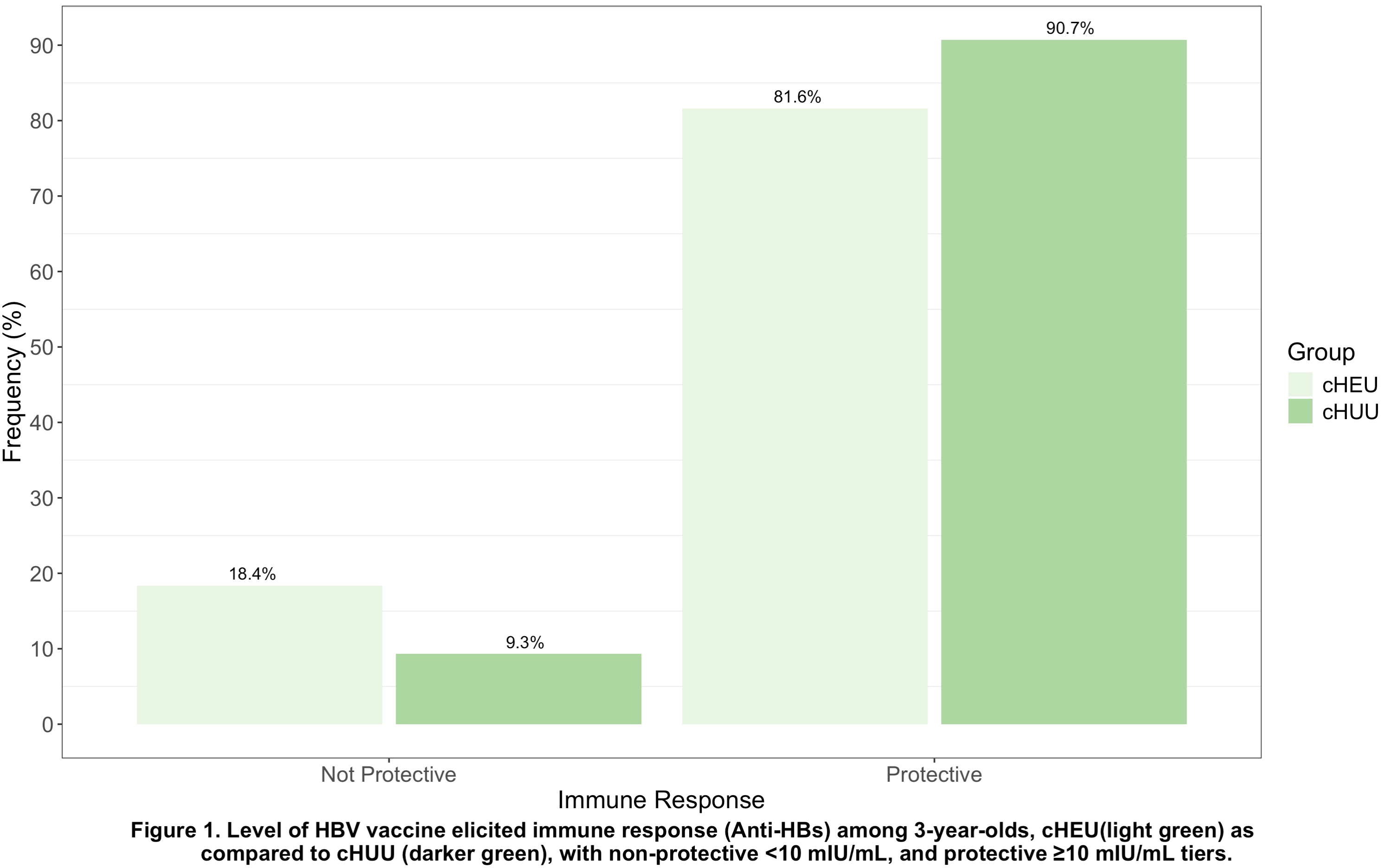
Women with HIV (WWH) were older, median age 30 years (interquartile range (IQR):25–35) compared to those without (24 years (IQR:21–29)) (p<0.001). Among 248 maternal plasma samples tested (>24 weeks gestation), HBV prevalence was 2.0% (95% CI:0.74–4.9). WWH had a higher HBV exposure (anti-HBc positivity) 29.0% (95% CI:22.5–36.4) compared to mothers without HIV, 13.9% (95% CI:7.2–24.5, p=0.02). HBV prevalence among 3-year-olds was 0.56% (1/179) (95% CI: 0.03–3.5) with no observed differences by HIV exposure (0.74% cHEU vs 0% in cHUU, p=0.53). None had prior HBV exposure. 18.4% (25/136) of cHEU and 9.3% (4/43) of cHUU had non-protective HBV immunity at the age of 3 (Figure 1). Vaccine response was assessed in 89 paired plasma samples available at 2 and 3 years. A significant decline in anti-HBs titers within a year was observed in both cHEU (coefficient=0.76, p<0.001) and cHUU (coefficient=0.80, p<0.01). Of the 17 (19.1%) non-responders (<10mIU/mL), 14 (83.2%) were cHEU, and a significant decline in immune response was observed among cHEU within 12 months (p<0.05), with no difference in cHUU (p=0.08).
Conclusions
We report rapid waning of HBV vaccine immunity within the first 3 years of life, which was more pronounced in cHEU than those cHUU. This increases the risk of HBV infection hence longer-term studies are needed to determine if HBV vaccine booster doses are required for these children.
Table or Figure