Background
COVID-19 remains a public health concern despite availability of effective interventions. Clinical studies have shown that remdesivir (RDV) reduces mortality, hospitalization, disease progression, and recovery time in individuals hospitalized with COVID-19. Current NIH guidelines recommend RDV treatment for patients at high risk of disease progression. This study of patients hospitalized for COVID-19 aimed to identify attributes linked with the likelihood of receiving delayed or no RDV treatment during the Omicron period.
Methods
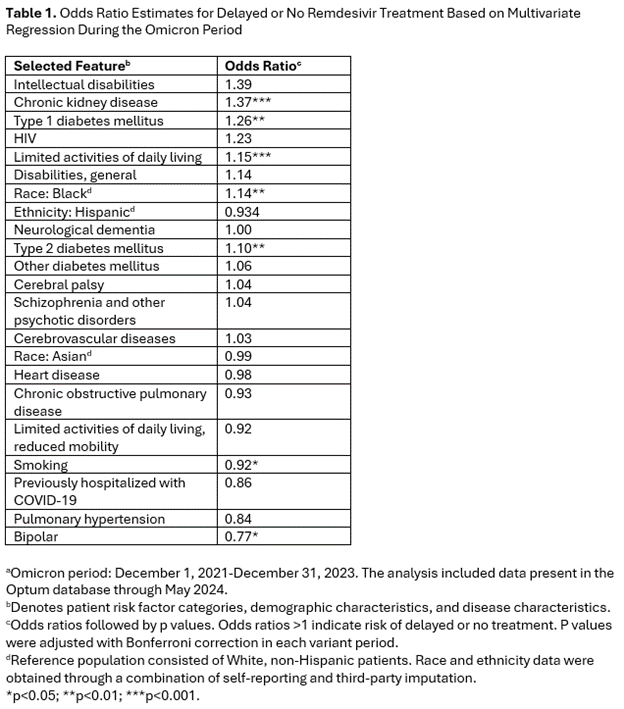
This retrospective observational cohort study was conducted using the Optum database (study period: May 2020-December 2023), with a combination of self-reported and imputed race data. The study sample included 88,416 hospitalizations by patients in the US aged ≥18 years who were hospitalized with a COVID-19 primary diagnosis and enrolled in the database ≥6 months prior to hospitalization. Patients could have >1 hospitalization, with a washout period of 4 months between hospitalizations. 3456 patient attributes associated with higher risk for COVID-19 diagnosis as defined by the CDC were identified in the dataset and grouped into 46 risk factor categories. Recursive Feature Elimination was applied over different variant periods (pre-Delta: May 2, 2020-May 31, 2021; Delta: June 1- November 30, 2021; Omicron: December 1, 2021-December 31, 2023) to select the most informative risk factor categories associated with delayed (≥3 days after admission) or no RDV treatment in each variant period. Multivariate logistic regression was then utilized to estimate the risk of delayed or no RDV treatment for each risk factor category.
Results
During the Omicron variant period, patients with chronic kidney disease, type 1 or 2 diabetes, or limited activities of daily living, and those who were Black showed significantly greater risk of receiving delayed or no RDV treatment. Patients who were diagnosed as bipolar or as smokers were more likely to receive timely RDV treatment.
Conclusions
Using machine learning, we showed that select patient attributes influenced the likelihood of receiving delayed or no RDV treatment upon hospitalization for COVID-19; this methodology has the benefit of allowing near real-time analysis of treatment patterns in the context of a pandemic. These results identified factors that have influenced treatment practices, which can help guide future efforts to reduce healthcare disparities and enhance health equity.
Table or Figure