Background
Pre-exposure prophylaxis (PrEP) is a cornerstone of HIV prevention worldwide. In Italy, a decisive policy shift occurred in May 2023 with the introduction of reimbursement by the Italian Medicines Agency (AIFA). Until then, PrEP was only available out-of-pocket, representing a significant barrier to uptake.
Methods
Monocentric observational cohort study at IRCCS Policlinico in Milan, a tertiary center which includes an ID department and an STI center. We analyzed PrEP-naive individuals initiating PrEP from January 1, 2022 to December 31, 2023 enrolled in two different groups: Group 1 (n=35) who started PrEP before AIFA reimbursement (T0–T1) and was observed during the reimbursed phase (T1–T2); Group 2 (n=62) who initiated PrEP after reimbursement (T0 – T1). Demographic, behavioral data, prior STIs and PEP use, PrEP regimen, retention, and vaccination status (HAV, HBV, HPV, Mpox) were collected. STI incidence was expressed as rates per 100 person-years (py). Chi-squared, Fisher’s exact and Student’s t-test were used for categorical and continuous variables, respectively.
Results
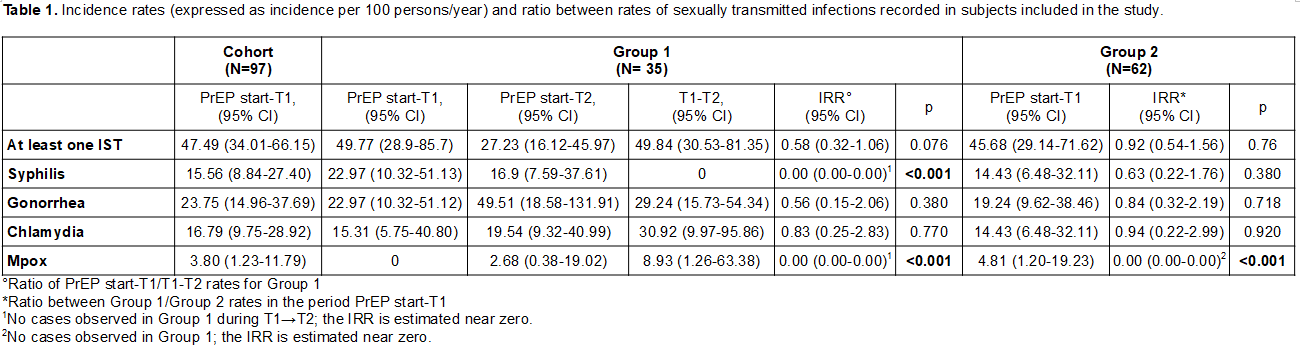
We enrolled 97 individuals: 97.9% MSM, median age 34 years (IQR 29–41), mainly from Milan metropolitan area (66%). Previous STIs were reported by 61%, and 28% had used PEP. On-demand PrEP was predominant (68%). No significant differences were observed in epidemiological characteristics between the two groups. Retention represented a critical issue in both group (20% lost at T1 and 25% at T2 in Group 1; 22.6% lost at T1 in Group 2). Overall incidence of ≥1 STI was 47.5/100py (95%CI 34.0–66.1) with gonorrhea and chlamydia showing elevated rates in both groups. Rates of syphilis significantly declined in Group 1 during reimbursement phase (T1–T2, p<0.001) (Table 1). Preventive immunizations improved during reimbursement phase: HAV coverage increased from 66% to ~90%, HPV from ~30% to >90%, and Mpox from 0 to 40–68%.
Conclusions
This study provides unique insight into the impact of reimbursement policies on PrEP users profiles. While gonorrhea and chlamydia remained high, syphilis dropped dramatically during reimbursement phase, suggesting a role for screening and treatment. Moreover a broader vaccination coverage was registered due to combined prevention strategies. National reimbursement expanded access and reinforced PrEP as a platform for comprehensive sexual health. High loss to follow-up remains a major challenge, calling for strategies to maximize PrEP’s long-term public health impact in Italy.
Table or Figure