Background
Alterations in gut microbiota have been implicated in HIV infection and cardiovascular disease (CVD). However, how gut microbial alterations may lead to host inflammation and changes in metabolomics profiles affecting atherosclerosis is not fully elucidated, especially in the context of HIV.
Methods
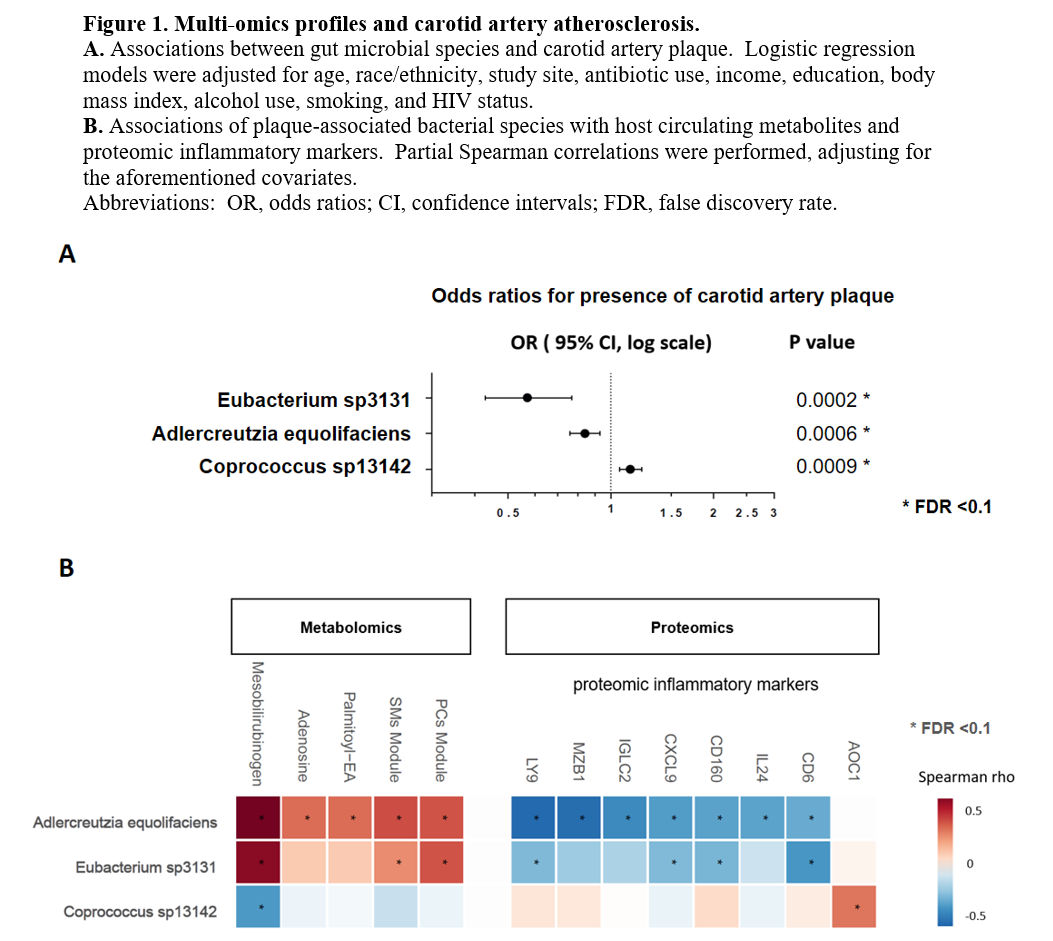
We examined associations of gut microbial species and functional components measured by shotgun metagenomics with carotid artery plaque (focal intima-media thickness >1.5 mm) assessed by B-mode carotid artery ultrasound in 359 men (65% HIV+, mean age 63) from the MACS/WIHS Combined Cohort Study. We measured 822 plasma metabolites using liquid chromatography-tandem mass spectrometry and 2866 circulating proteins by Olink platform. We further integrated plaque-associated microbial features with proteomics and metabolomics profiles in relation to plaque.
Results
Carotid artery plaque was detected in 115 of 359 men (32%). The gut microbial species Adlercreutzia equolifaciens and Eubacterium sp3131 were associated with lower odds of plaque, while the potentially pathogenic bacterium Coprococcus sp13142 was positively associated with plaque, after adjusting for demographic and behavioral factors. Results were consistent in both men with and without HIV. We examined correlations between these plaque-associated species and conventional CVD risk factors, and found that A. equolifaciens correlated with HDL cholesterol (r=0.26, P<0.001) and inversely correlated with systolic blood pressure (r=–0.17, P=0.009). These plaque-associated microbial species were also associated with a range of circulating metabolites and inflammatory proteins. For example, A. equolifaciens correlated with metabolites palmitoyl-EA (known for antihypertensive and anti-inflammatory properties) and mesobilirubinogen (a metabolic product of bilirubin with antioxidant properties), and inversely correlated with the pro-inflammatory chemokines CXCL9, immune regulator CD160 and IL-24, which promotes cell apoptosis. Associations between bacterial species and plaque were attenuated after further adjustment for specific microbial associated circulating metabolites and proteomic inflammatory markers.
Conclusions
We identified gut microbial features associated with carotid artery atherosclerosis, with certain microbiota-related metabolites and inflammatory markers partially explaining these associations. This work, if validated, suggests potential gut microbiota-related targets for cardiovascular prevention in men with and without HIV.
Table or Figure