Background
Sepsis, often due to pneumonia, is a leading cause of death among people hospitalized in the US. HIV was a clear risk for death from pneumonia/sepsis in the pre-antiretroviral therapy (ART) era, but the impact of HIV in the current era is less clear. Sepsis mortality may be impacted by non-physiologic factors associated with an HIV diagnosis. We investigated whether a diagnosis of HIV along with race and sex has an impact on pneumonia/sepsis mortality.
Methods
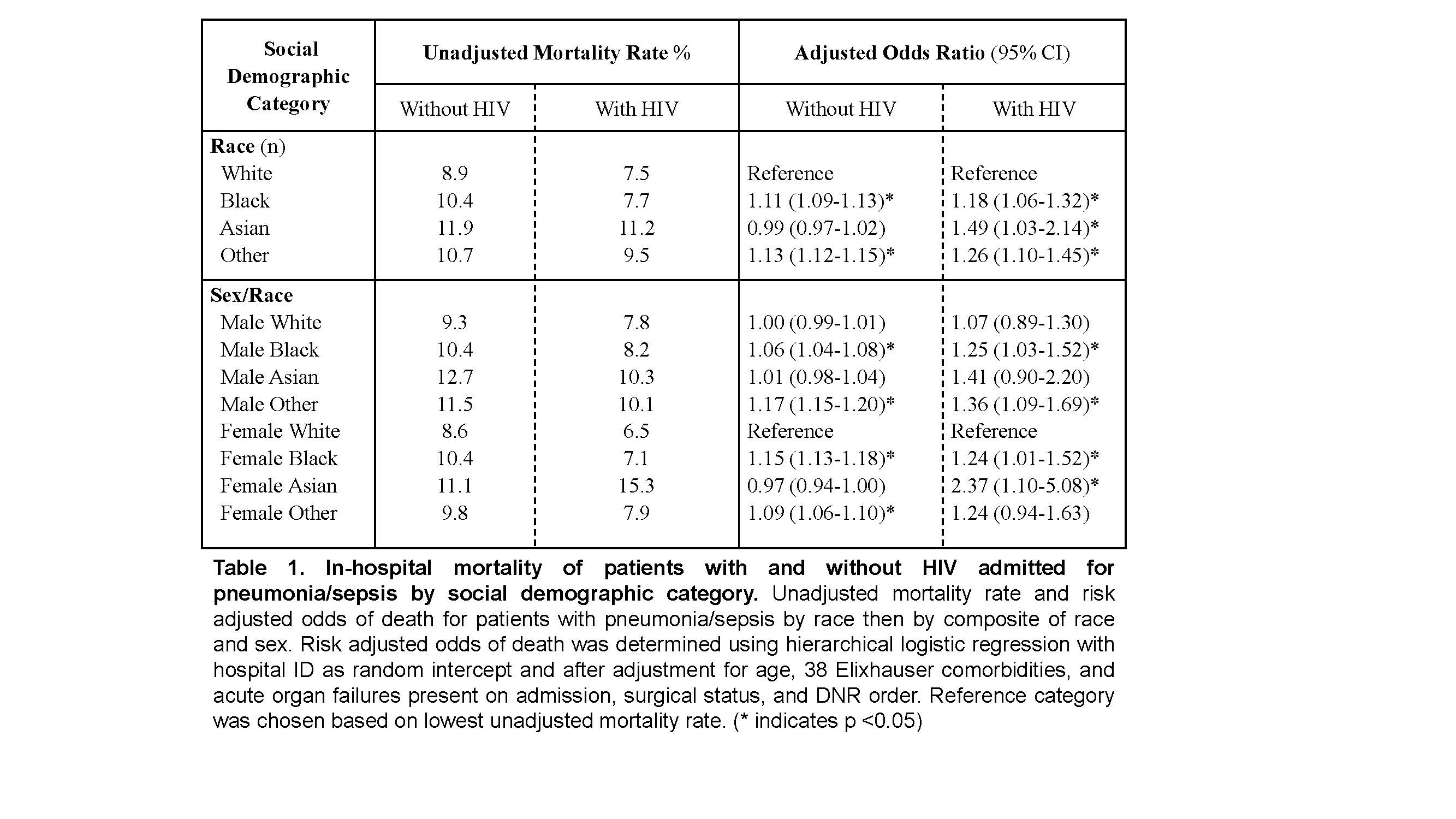
We used the Healthcare Cost and Utilization Project State Inpatient Databases to create a cohort of adults with and without HIV hospitalized with pneumonia and/or sepsis from 7 states from 2018-2020. ICD-10 codes defined disease states and exposure characteristics. We calculated crude in-hospital mortality based on race and an intersectional variable of race and sex (Table 1), stratified by HIV status. Risk adjusted odds of death were calculated in multivariable models with the hospital as a random intercept and adjusted for pertinent variables. We tested the interaction between race and intersectional category with HIV status.
Results
We identified 2,922,295 encounters with pneumonia and/or sepsis (42,646 with vs 2,879,649 without HIV). Those with HIV were younger (mean age 51.3 vs 66.7), more likely male (67.6 vs 51.6%), and had lower mean predicted mortality (6.7 vs 12.8) than those without HIV. Those with HIV had mostly lower crude in-hospital mortality rates than those without. Overall, non-White groups had higher adjusted odds of death than Whites in both those with and without HIV. Across all intersectional groups, there was qualitatively a trend toward higher odds of death in non-White groups with HIV, with the largest statistically significant increase in Asian females. We detected significant interactions between race and HIV (p=0.0031) and race/sex and HIV (p=0.008).
Conclusions
In this large retrospective cohort study, crude mortality rates from pneumonia/sepsis differed by race and race/sex within each HIV status strata. The effect of HIV with race/sex was notable in Asian females. These findings highlight the differential impact of race, sex and HIV on sepsis mortality, and suggests that established patterns of racial and intersectional disparity in patients without HIV may not apply to those with HIV. Understanding differential experiences of access to care, ART rates, discrimination and bias across groups is critical to untangling clinical determinants of disease outcomes from social and structural ones.
Table or Figure