Background
Weight gain following ART initiation has been linked to an increased risk of diabetes among persons aging with HIV (PAH). We aimed to assess the impact of a hypothetical BMI maintenance program, implemented in the first 2 years after ART initiation, on cumulative diabetes risk over 7 years post-ART initiation.
Methods
The PEARL model is an agent-based simulation of comorbidities burden among PAH who have initiated ART in the US. We simulated the effects of a BMI maintenance intervention, where BMI remained stable for those who would otherwise gained it. Individuals starting ART between 2013–2017 with a normal or overweight BMI (18.5–30) and no prior diabetes diagnosis were eligible. The study was implemented at ART initiation via two arms: (1) a hypothetical intervention arm where eligible agents participated in the BMI maintenance program, and (2) a control arm receiving a placebo. Both arms were followed for five years after the intervention. Incidence of diabetes was estimated as new diagnoses per 1,000 person-years (pys) at risk over 7 years post-ART initiation, with effects analyzed by sex, race/ethnicity, and HIV risk factor categories.
Results
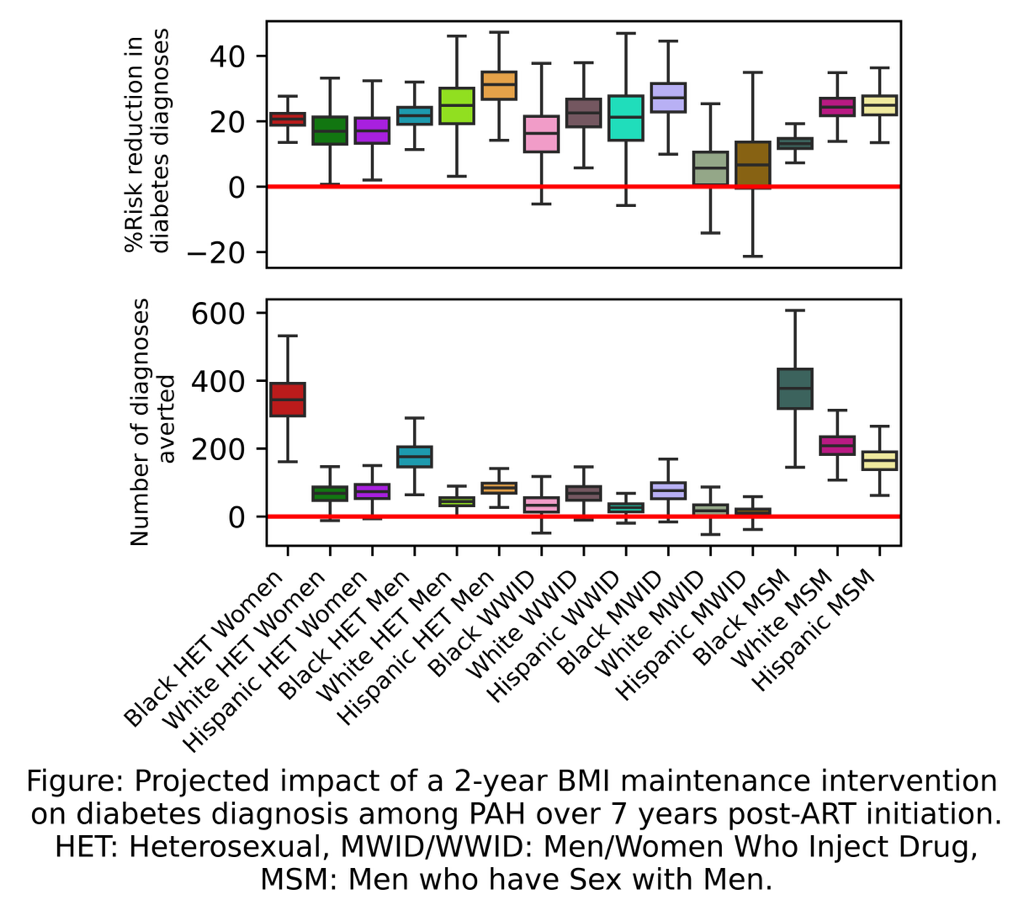
The model estimated a median of 171,000 PAH initiating ART in the US between 2013–2017, with 73% (n=126,000) meeting the study’s eligibility criteria. In the control arm, 66% of participants were expected to experience BMI increases, with 12% becoming obese within two years post-ART initiation. The projected diabetes risk was 10.7 (per 1,000 pys), resulting in a median of 9,500 new diagnoses over 7 years. The intervention (vs. placebo) reduced diabetes risk by 19%, preventing an estimated 1,800 new diagnoses over 7 years post-ART initiation. The number needed to treat to avert one diabetes diagnosis was 71. In subgroup analyses, the largest relative risk reduction was projected among Hispanic heterosexual men, and the greatest absolute reduction in diagnoses was among Black MSM and Black heterosexual women (Figure).
Conclusions
Maintaining BMI in the first two years post-ART initiation could significantly reduce diabetes risk among PAH in the 7 years post-ART initiation, indicating an urgent need for effective weight maintenance programs to be implemented at ART initiation and continued through the subsequent two years. The projected heterogeneity in impact of such intervention across subgroups underscores the importance of tailoring such interventions to address disparities in diabetes risk among PAH.
Table or Figure