Background
Pregnant adolescents and young adults living with HIV (AYALWH) in low-middle-income countries (LMIC), where the transition from HIV to antenatal care (ANC) is required, have poor clinic attendance and retention in HIV care. Little is known about the impact of this pregnancy-associated transition (PAT). This sub-study of the Adapt for Adolescents (A4A) trial evaluates the impact of PAT in AYALWH on HIV care engagement.
Methods
In the A4A study, AYALWH aged 14-24 years were enrolled at three public facilities in Kisumu Country, Kenya, between April, 2021—March, 2022. Female participants with a PAT included those who were pregnant at enrollment (excluding new diagnoses of HIV) and those who became pregnant during the study. Those with PAT were compared to female participants without a PAT during two years of study follow-up. This analysis explored care engagement, defined as missed clinic visit (at least 14 days late for a scheduled visit) or viral suppression (viral load <200 copies/ml). The pre-post transition condition for the pregnant group was compared. A chi-square test was used to compare viral suppression at year two for both groups, with subsequent multivariable logistic regression analysis to identify any cofounders.
Results
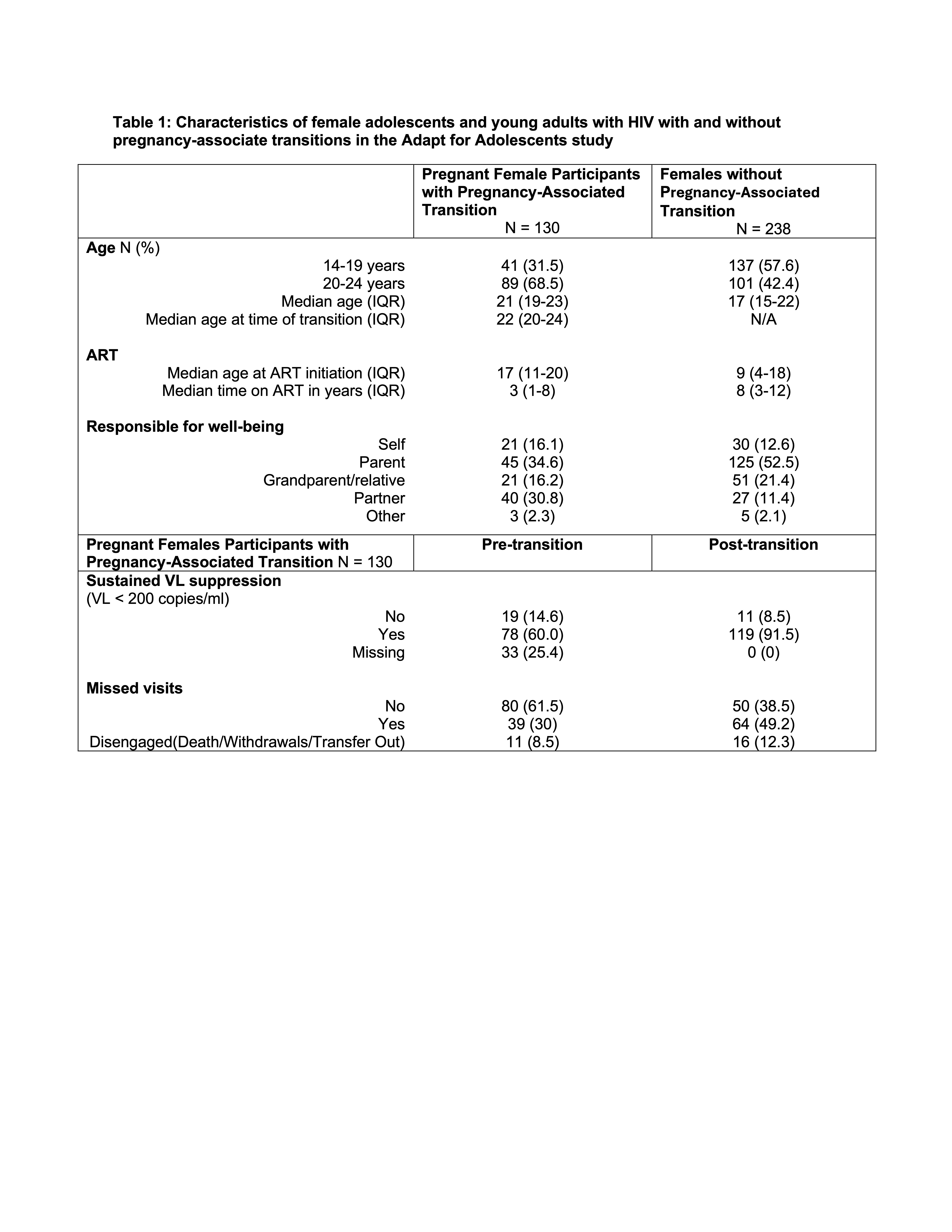
Of the 591 female AYALWH, we identified 130 (22.0%) experiencing a PAT, while 238 (40.3%) did not. The median age of participants with PAT was 21 years (interquartile range 19-23) compared to 17 years (interquartile range 15-22) for those without (Table 1). Among participants with a PAT, 78 (60.0%) had sustained viral suppression before transition, which increased to 119 (91.5%) after transition. Visit attendance declined post-transition, with 80 (61.5%) transitioned participants having no missed visits pre-transition, decreasing to 50 (38.5%) post-transition. Comparison of viral suppression at year 2 between those with PAT and those without transition was not statistically significant (adjusted odds ratio [aOR: 1.07, 95% confidence interval (CI) 0.45 – 2.55]. Increasing age was independently associated with increased viral suppression at two years (aOR 1.216, 95% CI 1.029, 1.438, p = 0.022).
Conclusions
This preliminary analysis indicates that pregnancy among AYALWH may be a motivating factor in achieving viral suppression. However, AYALWH with PAT show an increased number of missed visits post-transition. Further evaluation of the effect of transition due to pregnancy on HIV care engagement in AYALWH is needed.
Table or Figure