Background
Recent studies highlight the importance of statin therapy in people with HIV (PWH), even with moderate overall cardiovascular (CV) risk. Our study aims to assess CV risk management in a cohort of PWH in Germany.
Methods
The HIV-HEART Ageing (HIVH) cohort is a prospective study assessing CV risk of PWH in the German Ruhr area since 2004. PWH without prior major adverse CV events were examined at the 10 years follow-up and stratified into four risk groups based on the 2019 German guidelines for dyslipoproteinemia using the SCORE-risk table (very high: ≥10%, high: 5–<10%, medium: 1–<5%, low: <1%). Statin therapy indication was determined by LDL cut-off values for each risk group. PWH with statin therapy indications, those treated, and achievements of therapy goals were assessed. The results were compared using the ASCVD score for risk stratification.
Results
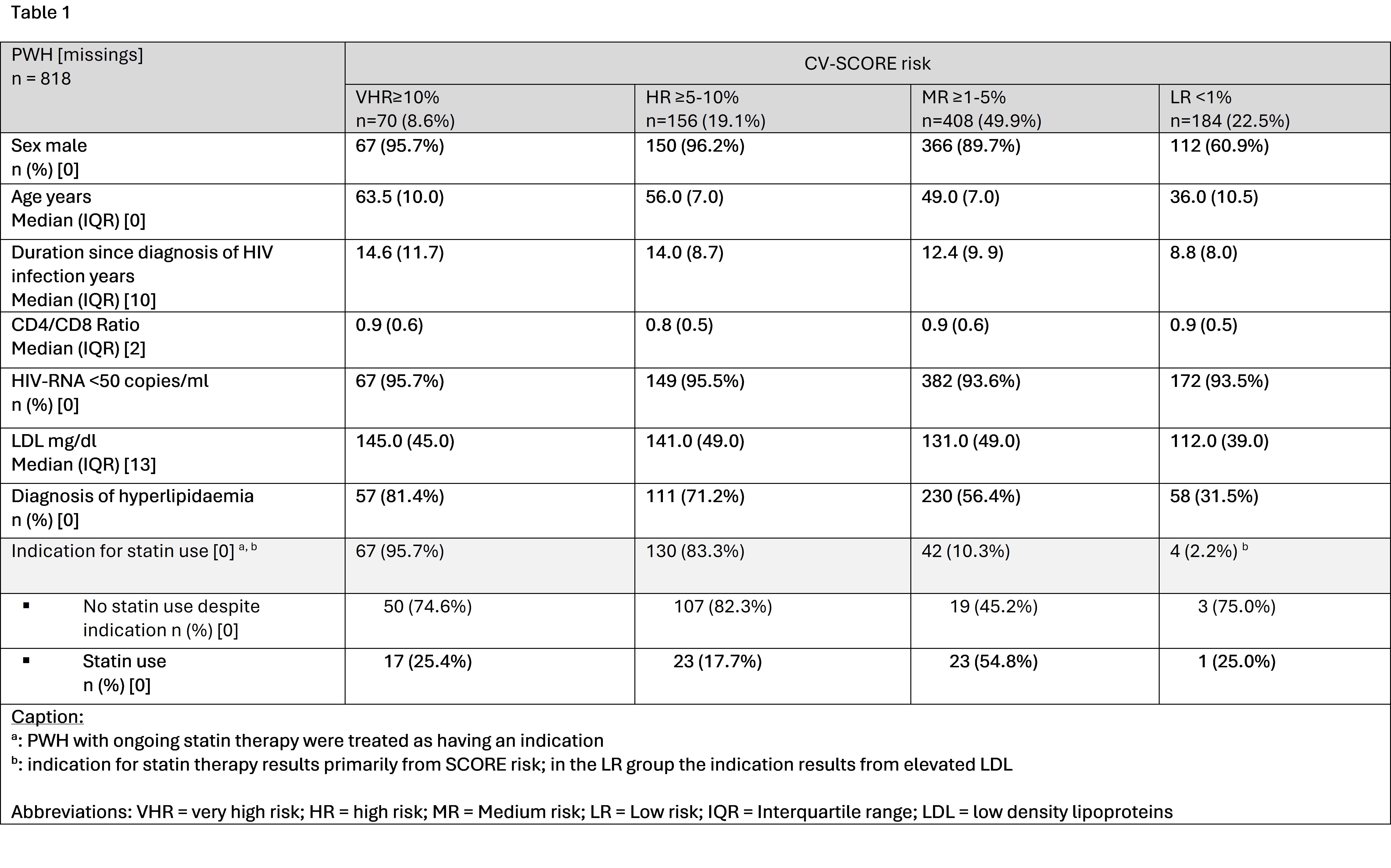
818 PWH were included in the analysis (basic characteristics see table 1). 64 participants had a reported statin therapy. Participants were classified according to SCORE risk groups, with 8.6% in the highest risk group, 19.1% in “high risk”, 49.9% in “medium risk”, and 22.5% in the “low risk” group. Of the 754 participants without statin intake, 179 (23.7%) had an indication for statin therapy according to German guidelines based on SCORE risk groups. In higher-risk groups the proportion of PWH with indication for statins was especially high (95.7% in “high risk” and 83.3% in the highest risk group). Among the 64 patients on statins, only 8 (12.5%) achieved the German guidelines recommended, risk adapted LDL therapy targets after 2.5 years. Less than 50% of all PWH with statin use have a sufficient reduction of LDL (by 40% of the baseline values). Using the ASCVD score for risk stratification, even 57.1% of those not treated had an indication for statin therapy.
Conclusions
This cohort demonstrates high CV risks and concerning low rates of statin therapies in PWH with elevated CV risk according to SCORE. If the ASCVD score was used for indicating statin therapy, the deficit of statin therapy was even more prevalent. Moreover, LDL therapy targets in those receiving statins were rarely met. Even though LDL targets are often described as idealized, a more consistent therapy of hypercholesterolemia is essential in high-risk patients with regular medical consultations such as PWH.
Table or Figure