Background
Hypertension is among the most common non-communicable disease comorbidities in people living with HIV (PLHIV) in Malawi. In a previous study, we found that ~80% of PLHIV with hypertension had uncontrolled hypertension (consistently ≥140 and/or ≥90 mmHg). We therefore sought to understand barriers to hypertension control from the perspective of clinical providers.
Methods
We deployed an online survey at 14 facilities in central and southern Malawi, which were involved in our prior study of hypertension control in PLHIV. Clinical providers were eligible if they had at least one year of experience prescribing antihypertensive medications. Surveys were informed by the Capability, Opportunity, Motivation, Behavior model for behavior change; and were self-administered in Qualtrics. We describe clinical providers’ knowledge of hypertension (based on nine questions, including clinical vignettes), barriers to providing hypertension care, and self-efficacy for managing clients with hypertension.
Results
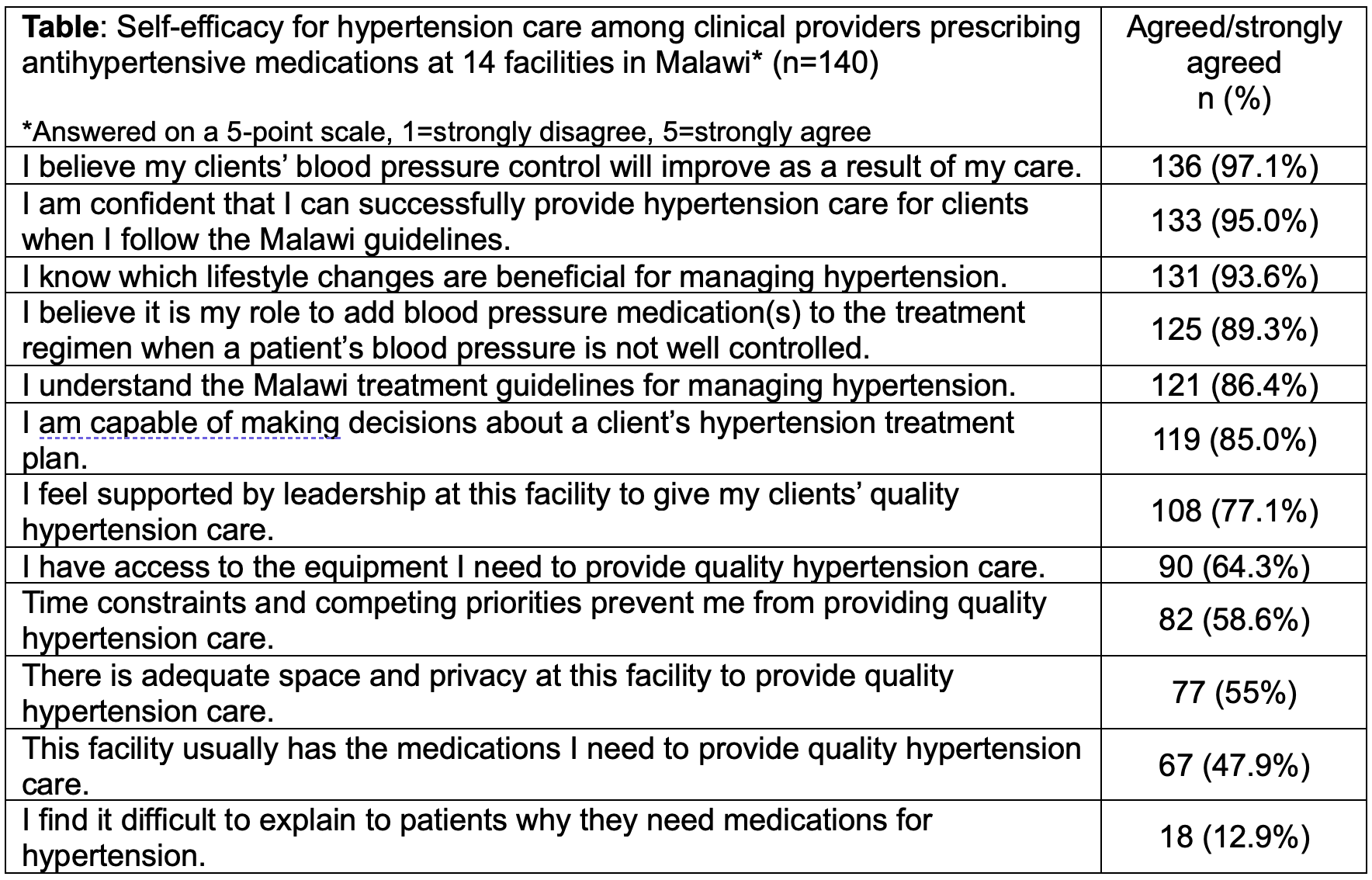
Between July-September 2024 we surveyed 140 clinical providers (66% male): 104 clinical officers (74%), 14 medical assistants (10%), 12 nurses (9%), 4 physicians (3%), and 6 other cadres (4%). Two-thirds of respondents had 5+ years of experience providing hypertension care. Clinical providers had high self-efficacy for hypertension care, with 85% feeling capable of managing antihypertensive medications (Table). However, the average knowledge score was 4.1 (SD 1.6) out of a total possible score of 9. Only half of clinical providers correctly identified the stages of hypertension and only 3% correctly answered all three guideline-based clinical vignette questions about when to start or escalate antihypertensive therapy. Providers reported that the most challenging aspects of delivering hypertension care were antihypertensive medication stock outs; lack of refresher trainings; shortages of lay staff to help with lifestyle counseling; and non-functional blood pressure machines.
Conclusions
Clinical providers in our sample had high self-efficacy for delivering hypertension care, but many had low knowledge, including about when to start and escalate antihypertensive medications. Given the high rates of uncontrolled blood pressure among PLHIV at these same sites, interventions that focus on improving clinical provider knowledge and targeting specific barriers, like medication supply and functional equipment, will be important for improving outcomes.
Table or Figure