Background
Viral suppression (VS) is only 65% among U.S. people with HIV (PWH), which could compromise Ending the HIV Epidemic (EHE) goals. PWH using geosocial networking apps (e.g. Grindr, used primarily by sexual minority men) should know their VS status to enhance the impact of Undetectable=Untransmittable among a population with high rates of sexual activity. We sought to determine the proportion of PWH on Grindr who know their VS status and achieved VS (<200 copies/mL).
Methods
U.S. adult PWH were recruited through Grindr to complete a survey from Jan-Sept 2024. We assessed the prevalence and correlates of past-year, self-reported VS using logistic regression adjusted for demographics, substance use, region, and residence in EHE jurisdiction. Those who reported adherence challenges were separately enrolled in a longitudinal cohort where viral loads were drawn, allowing comparison of objective VS to self-report.
Results
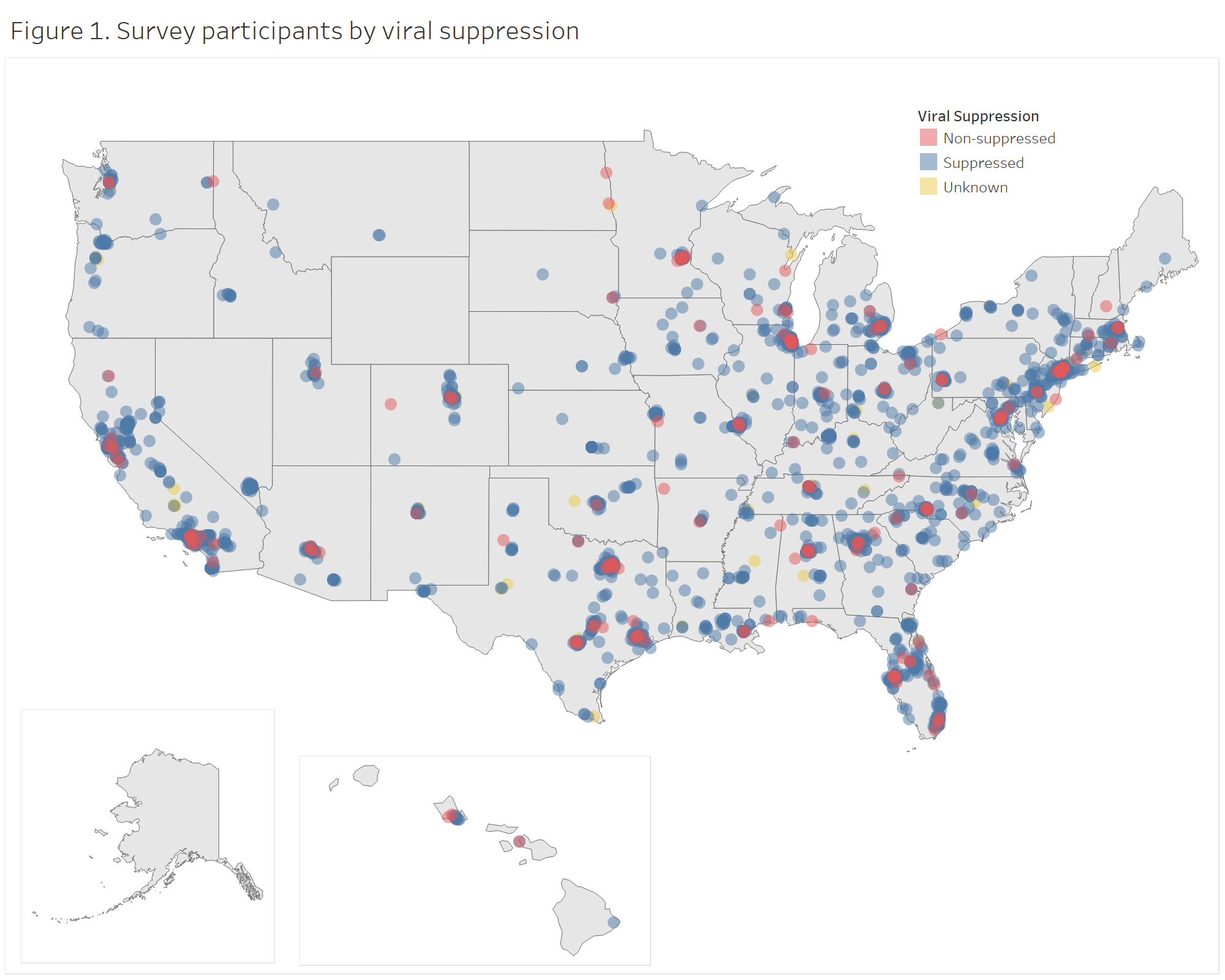
The final sample consisted of 2,933 geographically diverse participants (Figure 1); 29% were Black, 24% Latine; 4% transgender women, 10% other gender minorities; 32% age 18-34, 19% age 55+; 36% used stimulants. Overall, 95% knew their VS status in the past 12 months. Participants who were younger (i.e. 18-34 vs 55+; OR=0.47, p=0.02, 95% CI=0.24-0.84), Black (OR=0.57, p=0.01, 95% CI=0.36-0.88), and used stimulants (OR=0.56, p<0.001, 95% CI=0.40-0.79) had lower odds of knowing their VS status. Of those who knew their VS status, 94% reported complete VS for the past 12 months. PWH <age 55 were less likely to be suppressed (age 18-34 OR=0.45, p<0.01, 95% CI=0.25-0.77; age 35-54 OR=0.48, p<0.01, 95% CI=0.27-0.79). The Midwest had lower VS (OR=0.54, p=0.02, 95% CI=0.32-0.91) compared to the West. PWH who use stimulants also had lower VS (OR=0.47, p<0.001, 95% CI=0.34-0.65). Of the longitudinal cohort (n=930), 90% of those who reported being virologically suppressed were suppressed on study labs. Residing in an EHE priority jurisdiction was not associated with VS or knowing VS status.
Conclusions
This remote U.S. national cohort showed high rates of VS among PWH on Grindr, with high concordance with objective VS in a sub-sample. However, rates of stimulant use were higher than prior studies among PWH, with lower VS among this population, which should be addressed through targeted adherence interventions. Disparities in awareness of VS status among younger, Black, and stimulant-using PWH should be ameliorated through targeted care reengagement interventions, potentially via Grindr.
Table or Figure