Background
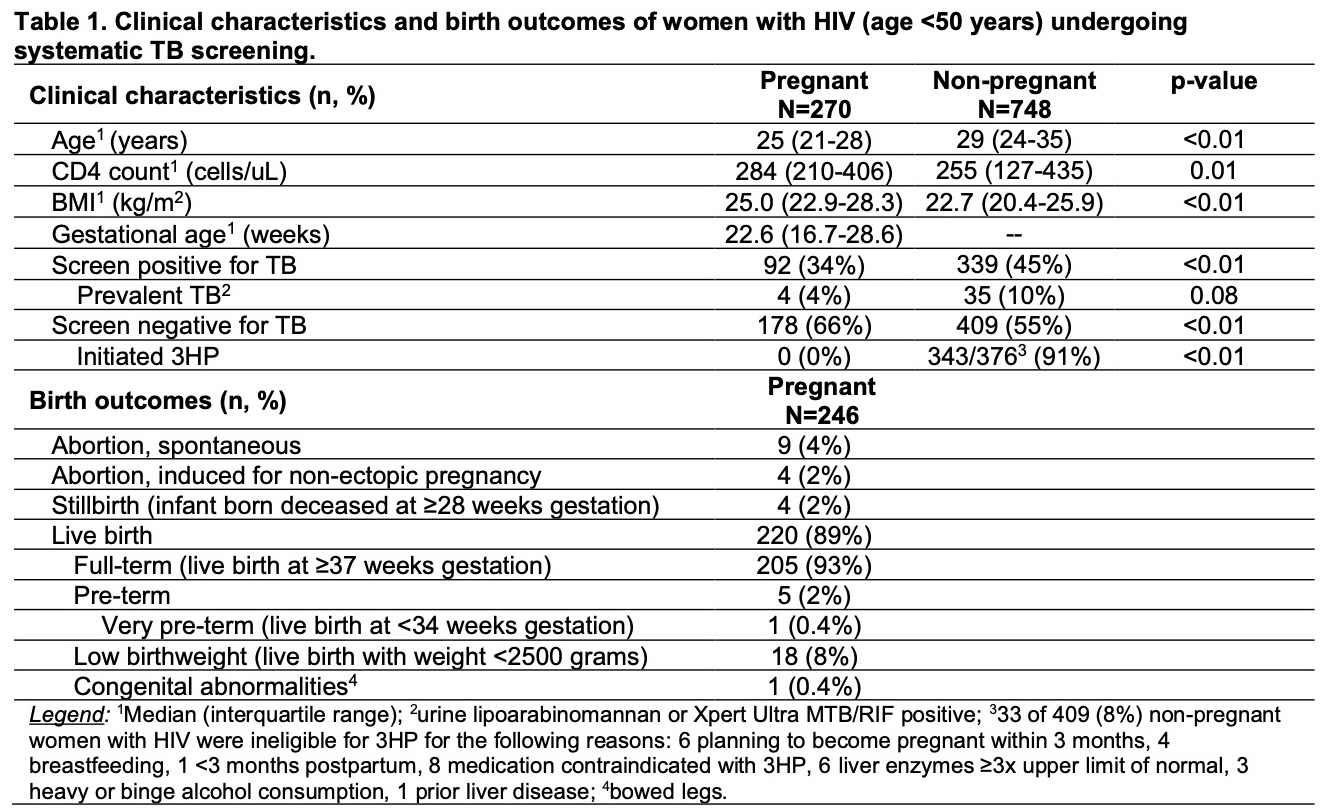
Systematic screening for tuberculosis (TB) may be particularly important for pregnant women with HIV (PWWH), as pregnancy increases TB risk independent of HIV. However, little is known about PWWH undergoing TB screening. We describe characteristics and pregnancy outcomes of PWWH enrolled in an ongoing trial evaluating the impact of two WHO-approved TB screening strategies on prevalent TB detection and TB preventive therapy (TPT) uptake.
Methods
From Nov 2020 to Jan 2023, we enrolled consecutive ART-naïve adults presenting to 4 HIV clinics in Uganda in a randomized trial comparing outcomes of different TB screening strategies (NCT04557176). All participants were randomized to either symptom- or C-reactive protein (CRP)-based TB screening. Screen-positive participants (≥1/4 symptoms or CRP≥5mg/L) underwent confirmatory TB testing. Screen-negative participants initiated 3HP (3-months of weekly isoniazid+rifapentine), unless contraindicated (e.g., pregnant). All women <50 years underwent baseline urine pregnancy testing. For women <50 years, we compared baseline characteristics (including TB screening status, TB prevalence, TPT uptake), by pregnancy status at enrollment and abstracted antenatal characteristics and birth outcomes from medical records for PWWH.
Results
Of 1018 women <50 years, 270 (27%) were pregnant at enrollment. Compared to non-pregnant women, PWWH (median gestational age 22.6 weeks, IQR 16.7-28.6) were younger (25 vs. 29 years), had less advanced HIV (CD4 284 vs. 255 cells/µl), higher BMI (25.0 vs. 22.7 m2/kg), and were less likely to screen positive for TB (34 vs. 45%) (p<0.01 for all). Among women who screened-positive, TB prevalence was lower among PWWH than non-pregnant women (4 vs. 10%, p<0.01). Among women who screened-negative, 0/178 (0%) PWWH and 343/376 (91%) non-pregnant women initiated 3HP and 0 PWWH were offered traditional preventive therapy. Birth outcomes were available for 246 (91%) PWWH and included 225 infants from 220 (89%) live births, 4 (2%) stillbirths, and 9 (4%) spontaneous abortions. Of the 225 infants, 5 (2%) were preterm, and 18 (21%) were low birthweight.
Conclusions
In our trial, 1 in 4 women initiating ART were pregnant. Although pregnancy is associated with increased TB risk, TB prevalence among PWWH was less than half that of non-pregnant women, suggesting differences in care-seeking behavior and/or TB screening test sensitivity, and PWWH were less likely to receive TPT, highlighting gaps in TPT coverage with novel and traditional regimens.
Table or Figure