Background
Current classification methods of neurobehavioral (NB) disorders in people with HIV (PWH) do not reflect their underlying biology well. We compared cerebrospinal fluid (CSF) proteomics between current classification methods and novel, multidimensional NB phenotypes (NBPs) to determine their biological associations.
Methods
We assayed CSF from 286 virally suppressed participants with the Olink Target-96 Inflammation panel. 32 proteins had >75% of values below detection and were excluded. NB measures included global and domain deficit scores (GDS and DDS), Beck Depression Inventory (BDI)-II and subscales, and four NBPs derived from these features along with cognitive symptoms and daily functioning. NBP1: healthy, NBP2: depression-dominant, NBP3: unhealthy in all features, and NBP4: cognitive impairment-dominant. Analysis methods included linear regression, multiple testing correction (Benjamini-Hochberg), analysis of variance, Tukey highly significant difference test, and enrichment analysis such as pathway analysis.
Results
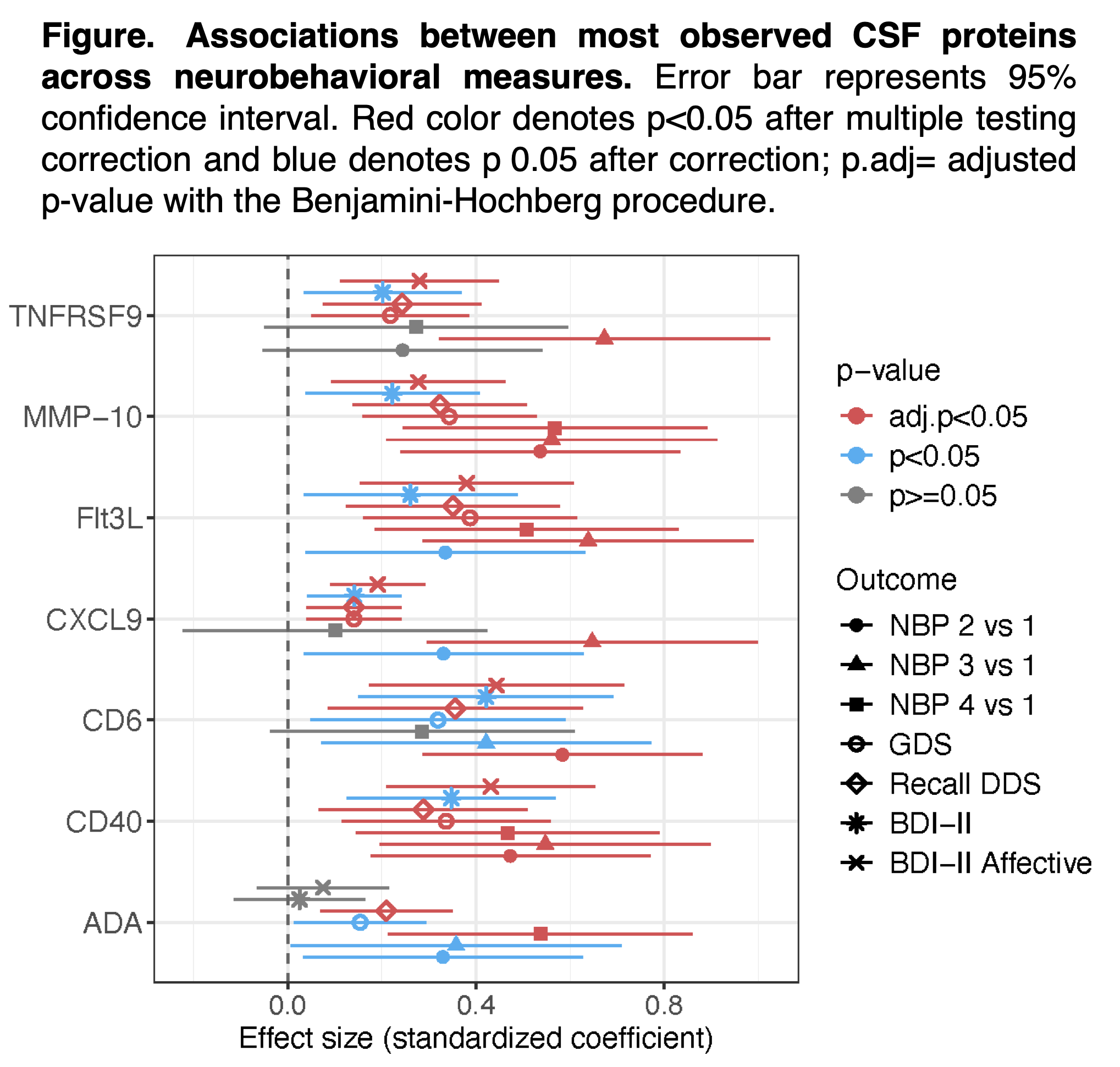
Cohort characteristics: mean age 45 years, 21% female sex, 46.5% Black, median CD4+ T-cells 473/µL. 44 proteins associated with at least 1 NB measure, with some in common and others distinct (the Figure shows a subset of 7). CD40 and MMP-10 were the most common across all measures. Recall and motor domains (but not others) associated with multiple proteins, while GDS associated with fewer. BDI-II affective subscale associated with 32 proteins, the most of all NB measures, and apathy with fewer. Total BDI-II and other subscales did not associate with any protein. Each NBP associated with at least one unique protein compared to the healthy NBP. NBP3 was the most distinct. Biological process ontology analysis identified T-cell activation, chemotaxis, and B-cell and monocyte activation as the most represented.
Conclusions
Cross-sectional analyses identified distinct profiles of CSF inflammation-related proteins for different NB characteristics. Overall, the most common biological pathways support the importance of persistent immune activation and migration across vascular barriers. Traditional composite variables (e.g., GDS, total BDI-II) had limited associations with inflammation, while associations with NBPs and subscale metrics were stronger. Current composite variables have value for clinical classification, but subscales and data-driven NBPs may better reflect biological mechanisms and may better support new therapeutic strategies.
Table or Figure