Background
Sodium-glucose co-transporter 2 inhibitors (SGLT2i) have demonstrated cardiorenal benefits in the general population but can cause an acute dip in estimated glomerular filtration rate (eGFR), raising safety concerns, particularly in people with HIV (PWH) who may be more vulnerable to renal complications. Due to limited data in PWH, we aimed to assess the risk of acute eGFR decline with SGLT2i vs. other antihyperglycemic classes.
Methods
We conducted an observational study using data from 9 sites from the Centers for AIDS Research Network of Integrated Clinical Systems (CNICS) cohort. PWH initiating SGLT2i, glucagon-like peptide-1 receptor agonists (GLP-1RA), dipeptidyl peptidase-4 inhibitors (DPP4i), or sulfonylureas between 1996 and 2023 were included if they had ≥2 eGFR measurements: 1 at baseline and 1 within 6 months of antihyperglycemic initiation. Outcomes evaluated were time to ≥30% eGFR decline and ≥10 mL/min/1.73m² eGFR decrease within 6 months of initiation. We used Cox proportional hazards models, adjusted for age, sex, race/ethnicity, CNICS site, diabetes and hypertension diagnoses, baseline eGFR, viral load, CD4 count, use of tenofovir disoproxil fumarate, statins, insulin, and metformin at baseline, to compare SGLT2i with other antihyperglycemic classes combined and with each individual class.
Results
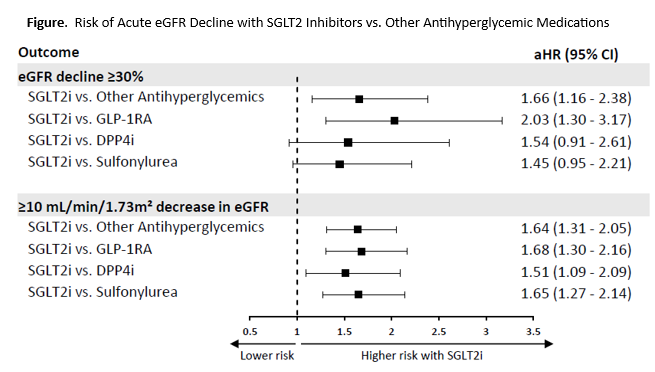
Among 2111 PWH included, 299 were new users of SGLT2i and 1812 of other antihyperglycemic classes (600 GLP-1RA, 225 DPP4i, 987 sulfonylurea). Mean age at baseline was 52 years (SD:10), with 75% male, 47% Black, 85% with diabetes, and a mean eGFR of 81 (SD:26). Among 221 events of ≥30% eGFR decline, rates were 15% in SGLT2i, 6% in GLP-1RA, 12% in DPP4i, and 11% in sulfonylureas. In adjusted models, SGLT2i were associated with a significantly higher risk of ≥30% eGFR decline compared to other antihyperglycemic classes (aHR=1.66, 95%CI:1.16-2.38) and GLP-1RA (aHR=2.03, 95%CI:1.30-3.17) but not significantly different from DPP4i or sulfonylureas. SGLT2i also showed a significantly higher risk of eGFR decline of ≥10 mL/min/1.73m² compared to all other antihyperglycemic classes.
Conclusions
Among PWH, SGLT2i were associated with a higher risk of acute eGFR decline compared to other antihyperglycemic classes, with the risk most pronounced vs. GLP-1RA. A ≥30% eGFR decline was more common in PWH than in studies from non-HIV populations, highlighting the need for careful monitoring, particularly after SGLT2i initiation. Further research is needed to evaluate long-term renal effects.
Table or Figure