Background:
Data on neurodevelopmental outcomes following in utero ART exposure remains scarce and most studies to date are among women living with HIV and their infants who have both ART and HIV exposure. We assessed the relationship between prenatal PrEP exposure and child neurodevelopment through 48 months among mother-child pairs without HIV.
Methods:
Data from women enrolled in a cluster RCT (NCT03070600) evaluating PrEP delivery strategies at 20 antenatal clinics in Western Kenya were analyzed. HIV-negative women were enrolled and offered oral tenofovir disoproxil fumarate (TDF)-based PrEP during pregnancy and followed through 9 months postpartum regardless of PrEP status. A subset were enrolled into an extension cohort at 4 sites to be followed until their children reached 5 years. Neurodevelopment was assessed by trained nurses at 36 and 48 months using the Malawi Developmental Assessment Tool (MDAT), a validated instrument that evaluates social, language, fine motor, and gross motor domains. The association between prenatal PrEP exposure and MDAT domain scores at 36-48 months was evaluated using linear regression models clustered by facility and adjusted for gestational age at birth, maternal age and education, infant sex, and partner HIV status.
Results:
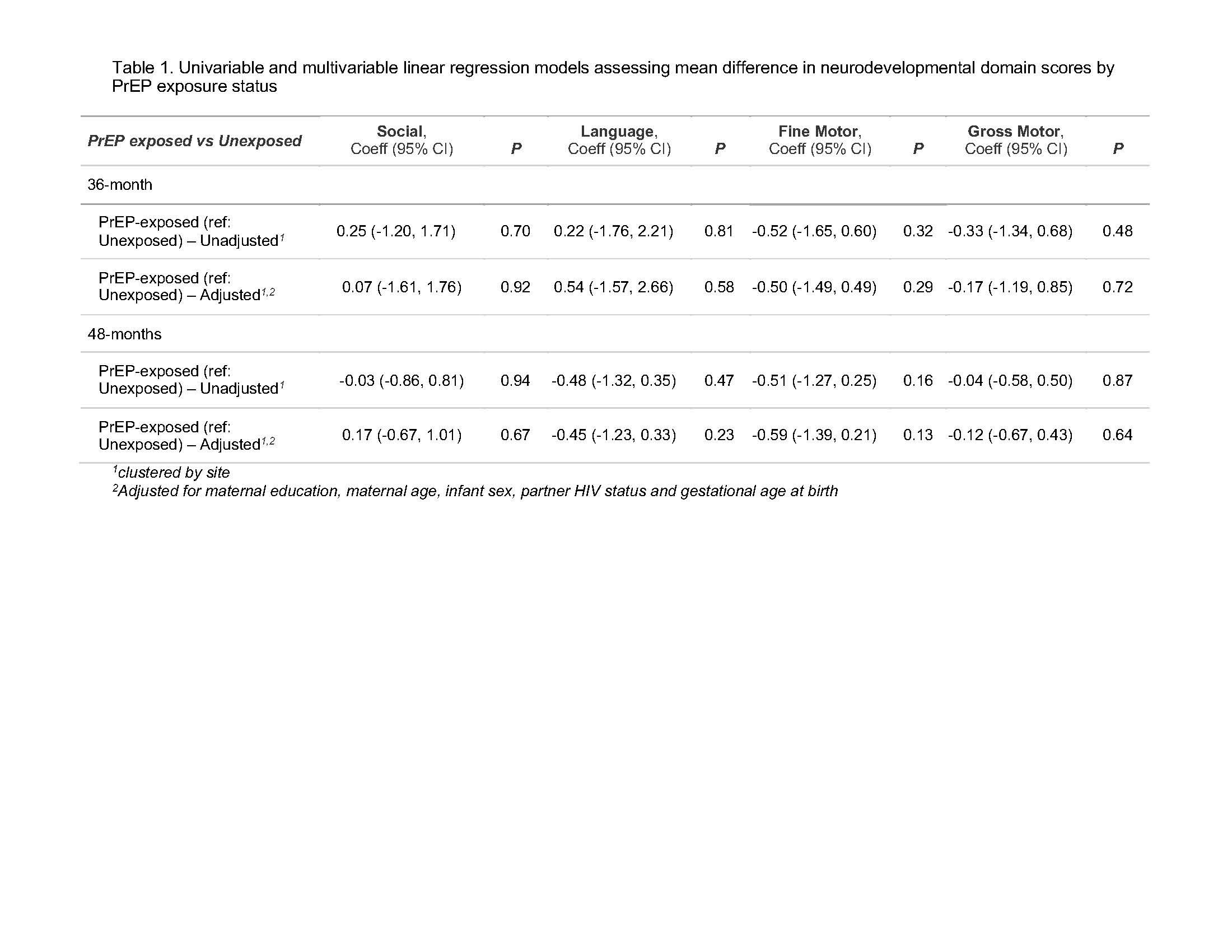
As of September 2023, 648 mother-child pairs had children aged 36-48 months and were included in the analysis, 21% had any PrEP exposure for a median duration of 3.3 months (IQR: 2.4-4.3) during pregnancy. Compared to mothers who did not take PrEP, mothers who took PrEP in pregnancy were more likely to only have primary school education (70% vs. 56% p=0.004) and to have a partner known to be living with HIV or of unknown status (67% vs 37% p<0.001). There was no difference in mean MDAT score for any domain at 36 months (adjusted mean differences: social 0.07, 95% CI: -1.61, 1.76, p=0.92; language 0.54, 95% CI: -1.57, 2.66, p=0.58; fine motor -0.50, 95% CI: -1.49, 0.49, p=0.29; gross motor -0.17, 95% CI: -1.19, 0.85, p=0.72). Results were similar at 48-months with no differences between exposure groups.
Conclusions:
No differences in neurodevelopment from 36-48 months were observed between children with and without prenatal PrEP exposure. Our results support a growing body of evidence demonstrating the safety of prenatal PrEP use and add to the limited data on neurodevelopmental outcomes in PrEP exposed children.