Background:
Excess weight gain has been associated with dolutegravir-containing antiretroviral therapy (ART), especially among people living with HIV (PLWH) of female sex and Black African origin. If undesired, weight gain after initiating dolutegravir might impact adherence, with potential downstream effects on viral suppression. We sought to examine the relationship between changes in body weight (BW) and changes in adherence and viral load (VL) among PLWH switching to tenofovir disoproxil fumarate/lamivudine/dolutegravir (TLD).
Methods:
The longitudinal African Cohort Study (AFRICOS) enrolls PLWH engaged in routine care at 12 PEPFAR-supported facilities in Kenya, Nigeria, Tanzania, and Uganda. We included participants who initiated TLD and had been on ART for ≥6 months prior and had visits both within 12 months before and 6-18 months after starting TLD, and were not pregnant. Pre/post-TLD initiation, we examined percent change in BW (≤1.5% [minimal change], >1.5% loss, >1.5%-< 5% gain, ≥5% gain [clinically significant]), change in self-reported antiretroviral adherence (0, 1-2, ≥3 doses missed in past 30 days), and change in HIV-1 RNA VL category (< 50 c/mL [undetectable], 50-999 c/mL [suppressed], ≥1000 c/mL). The association of percent BW change with change in adherence and VL was examined using multivariable multinomial logistic regression models using no change in either outcome as the reference value.
Results:
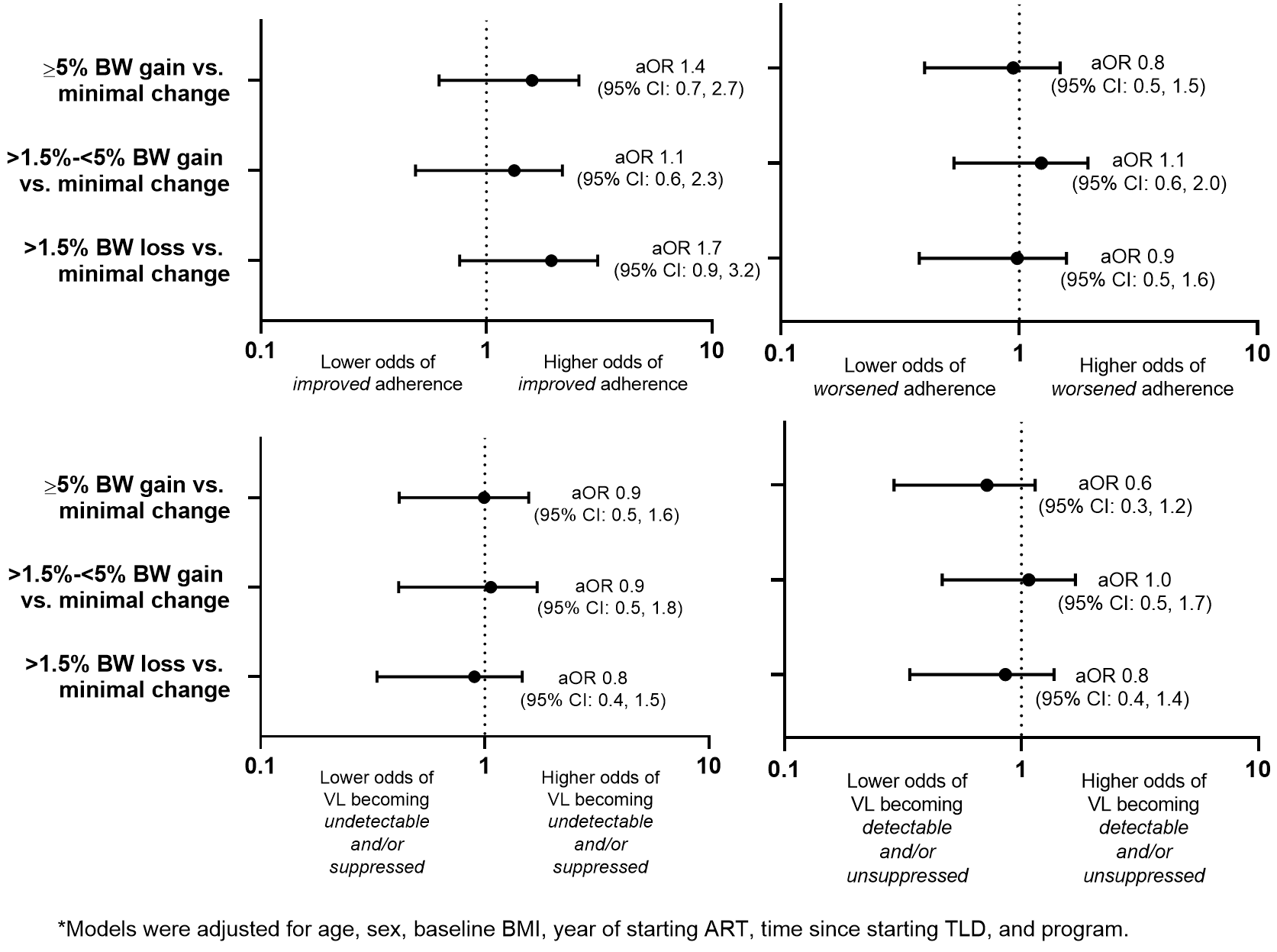
Among 1507 participants who started TLD from 10/2018-11/2021, median time from starting TLD to follow-up visit was 9 months (IQR: 7, 11). Pre/post-TLD, the prevalence of overweight/obesity increased from 33% to 38%, with 29% of all participants having a ≥5% BW gain. There were statistically significant (p=0.01) differences by sex in percent BW change, with largest differences for a ≥5% gain (females: 32%, males: 25%) and a >1.5% loss (females: 21%, males: 25%; 23% overall). Compared with a BW change ≤1.5%, BW changes ≥1.5%, including a ≥5% BW gain, were not significantly associated with changes in adherence or VL (figure). Results were similar when limiting to participants who were not underweight at baseline.
Conclusions:
Clinically significant weight gain after switching to TLD may not be a major threat to short-term adherence or viral suppression among ART experienced PLWH in sub-Saharan Africa. Although this finding is reassuring, increasing cardiometabolic risk in the TLD era needs to be urgently addressed while simultaneously optimizing HIV treatment outcomes.
Associations* of changes in body weight with changes in adherence and viral load before and after starting TLD