Background:
Sarcopenia is a geriatric syndrome associated with a loss of muscle mass and functionality. It may increase morbidity and mortality. As Asian data are limited, we investigated the prevalence and risk factors for sarcopenia in older people living with HIV (PLWH).
Methods:
We conducted a cross-sectional study in a cohort of virologically well-suppressed PLWH and age- and sex-matched HIV-negative controls, aged ≥50 years, from 2017 to 2018 in Bangkok, Thailand. Diagnosis of sarcopenia was based on Asian Working Group for Sarcopenia 2019 criteria: handgrip strength by a handheld dynamometer (male < 28kg, female < 18kg), walking speed 4-meter-walk < 0.8m/s and skeletal muscle mass (male < 7.0kg/m2, female < 5.7kg/m2) by bioelectrical impedance analysis. Osteoporosis was defined as T-score cutoff-points ≤-2.5 at any site of DEXA scan (lumbar spine, total hip and femoral neck). Frailty and nutritional status were evaluated using Fried’s criteria and Mini Nutritional Assessment, respectively. Multivariable regression analysis was used to assess the relationship between sarcopenia and participant demographic and clinical variables. We also compared bone turnover markers between those with or without sarcopenia.
Results:
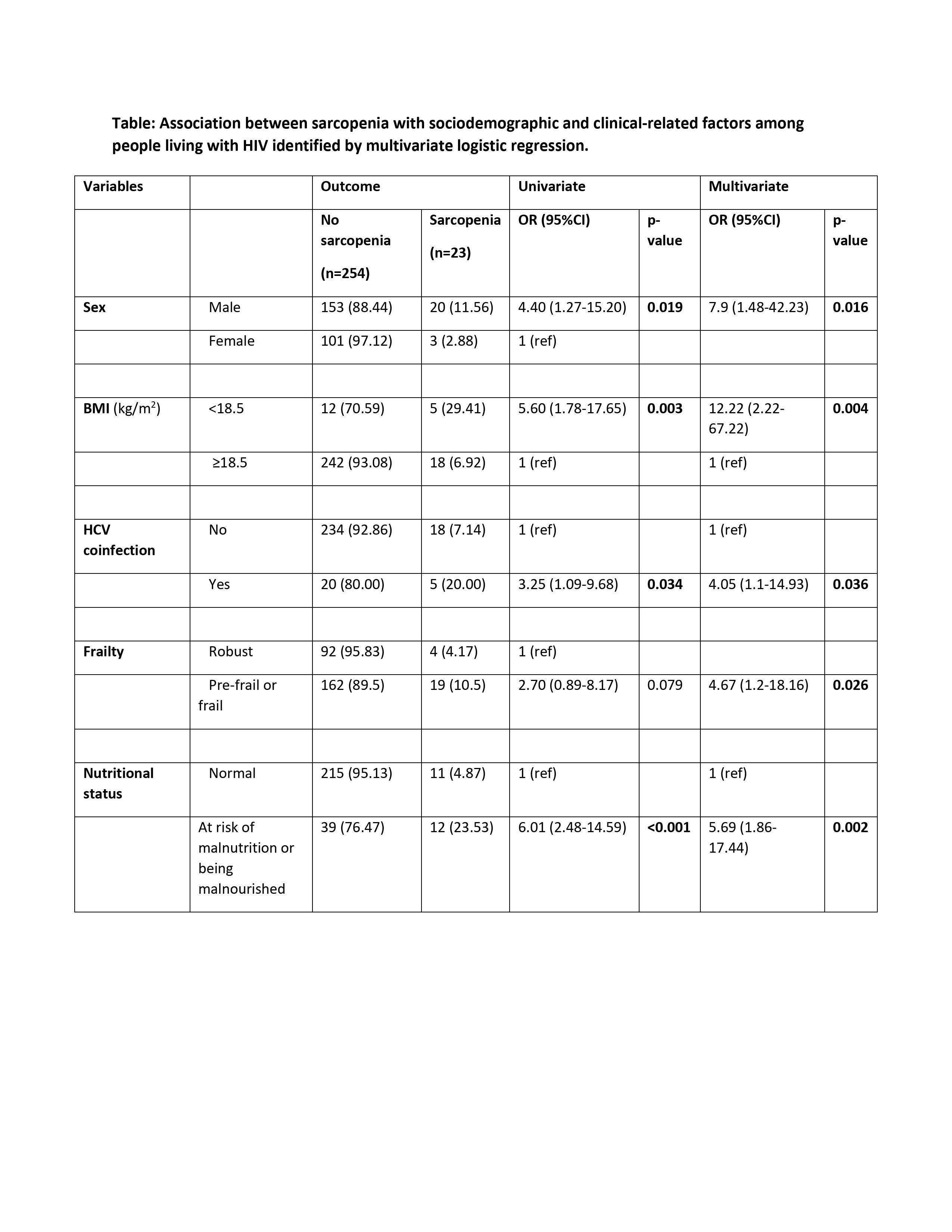
A total of 407 participants (277 PLWH and 130 controls) were included; 36% were female. Median age was 55 (interquartile range (IQR): 52-60) years and median duration of ART was 16 (IQR :13-19) years. PLWH had a higher prevalence of sarcopenia (8.3% vs 3.1%, p=0.05), HCV infection (9.0% vs 2.3%, p=0.011), frailty (9% vs 3.1%, p=0.001) and at higher risk of malnutrition or malnourishment (18% vs 7%, p=0.002). Osteoporosis at any site was almost double in PLWH than controls (15% and 8.5% (p=0.06). Serum 25(OH)D, phosphorous, calcium, C-terminal telopeptide (CTX), amino-terminal pro-peptide of type-1 procollagen (P1NP) and intact Parathyroid Hormone (iPTH) were not significantly different between the sarcopenia groups. In a multivariate model among PLWH, BMI < 18.5kg/m2, male sex, HCV coinfection, frailty and malnutrition were significantly associated with sarcopenia (Table).
Conclusions:
In this aging cohort, PLWH had a higher burden of sarcopenia than HIV-negative individuals. Besides low BMI and male gender, hepatitis C co-infection, poorer nutritional status and frailty were identified as predictive risk factors. Therefore, interventions to improve nutritional status and early HCV treatment may reduce the risk of sarcopenia in older PLWH.
Association between sarcopenia with sociodemographic and clinical-related factors among people living with HIV identified by multivariate logistic regression.