Background:
Breastfeeding based HIV transmission accounts for the majority of new pediatric HIV infections. Antiretroviral therapy (ART) fails to eradicate HIV reservoirs, which lead to rapid viral rebound following ART interruption. Therapeutic interventions effective in eliminating viral reservoirs and thereby delaying or preventing viral rebound in the absence of ART would be highly valuable for children living with HIV, who otherwise must be on ART for their lifetime. The objective of this study was to evaluate the immunological and virological impact of DNA/MVA/Protein-based therapeutic vaccination in a pediatric model of oral SHIV-infected ART-suppressed infant rhesus macaques (RMs).
Methods:
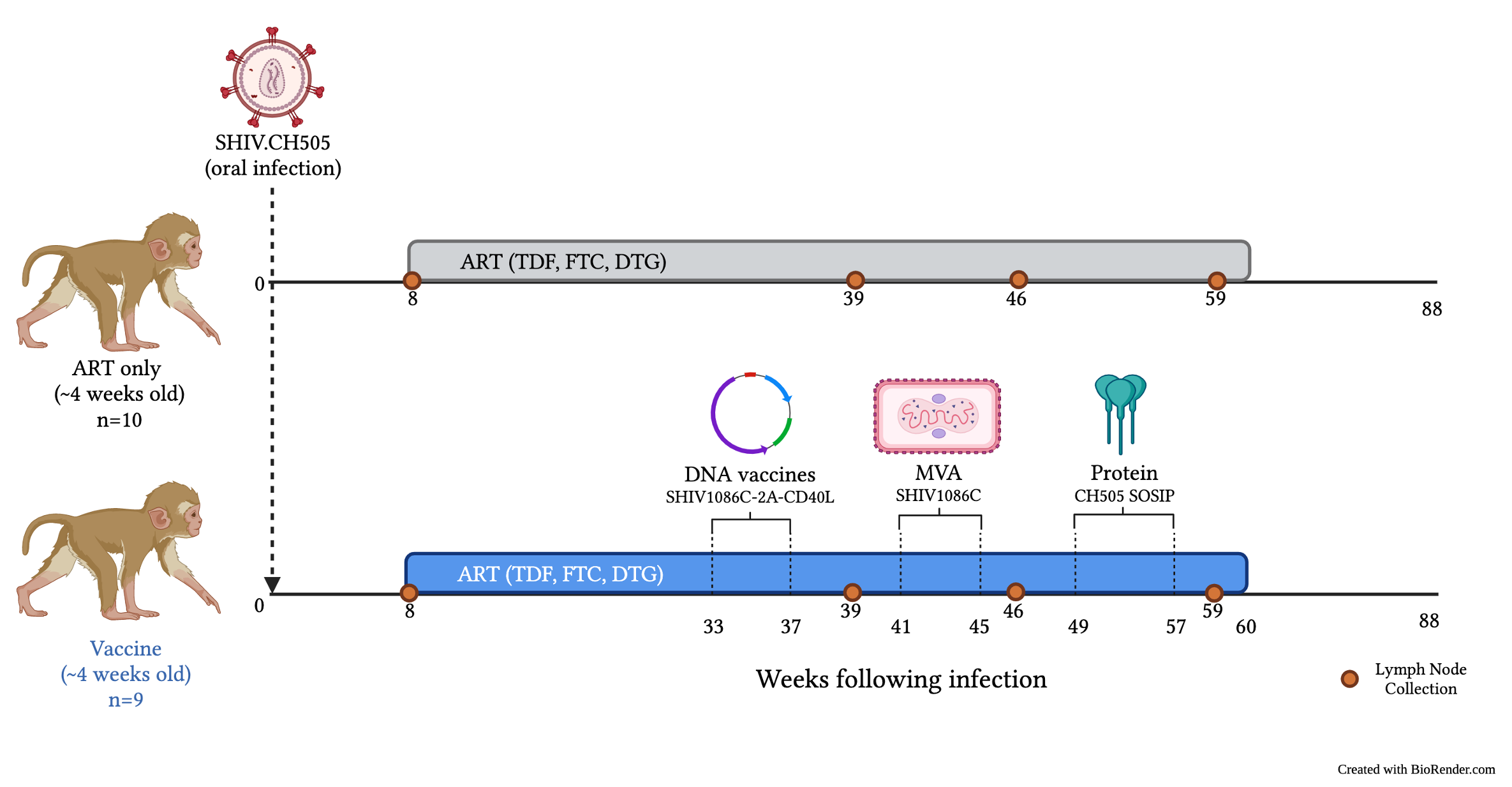
A total of 19 infant RMs of ~4 wks of age were orally infected with SHIV.C.CH505.375H.dCT and placed on daily ART at 8 wpi. After complete viral suppression, a group of 9 animals was intramuscularly vaccinated with two doses each of SHIV-DNA-rhCD40L, SHIV-MVA and CH505 SOSIP protein under ART. Ten RMs did not receive vaccinations and served as ART only controls. At 60 wpi, ART was interrupted (ATI) and all RMs were followed for 14 wks to study viral rebound kinetics. Peripheral blood (PB), lymph node (LN), and gut tissues were collected throughout the study for multiple virological and immunological analyses.
Results:
DNA/MVA/Protein-based therapeutic vaccination was safe and highly effective in inducing highly functional SHIV-specific CD4+ and CD8+ T cell responses in PB and LN under ART. Vaccination also significantly expanded granzyme B- and perforin- expressing total and SHIV-specific CD8+ T cells in PB. HIV-Env specific binding and neutralizing antibody titers were increased significantly following vaccination and were significantly higher as compared to ART-only group. To our surprise, despite vaccine-induced robust immune activation, vaccination did not reduce viral reservoirs. Moreover, following ATI, no difference in terms of time to viral rebound or viral control were observed between the groups.
Conclusions:
These data show that DNA/MVA/Protein-based therapeutic vaccination is safe and effective in mounting robust SHIV-specific humoral and cellular immune response in SHIV-infected ART-treated infant RMs. Notably, additional interventions such as latency reversal agents or immune checkpoint blockade may be required to reduce viral reservoirs and alter rebound dynamics post ART release in vaccinated RMs.
Fig. 1. Graphical schematics of the study design